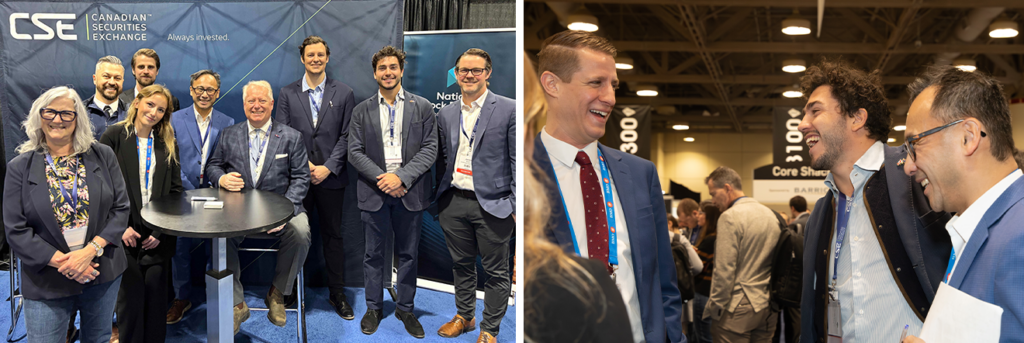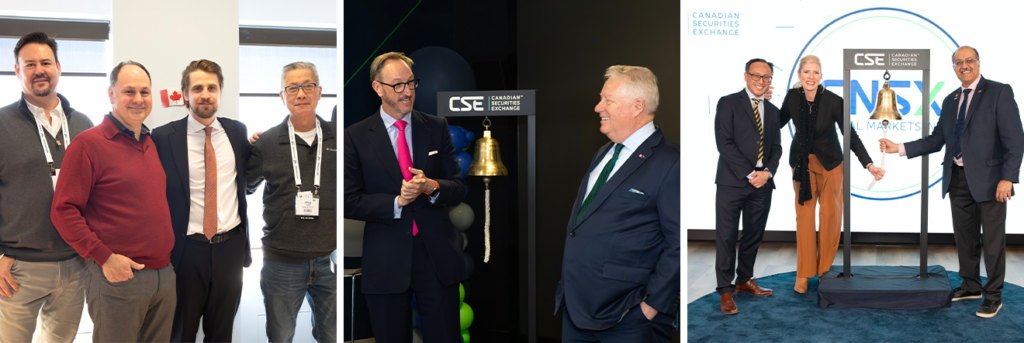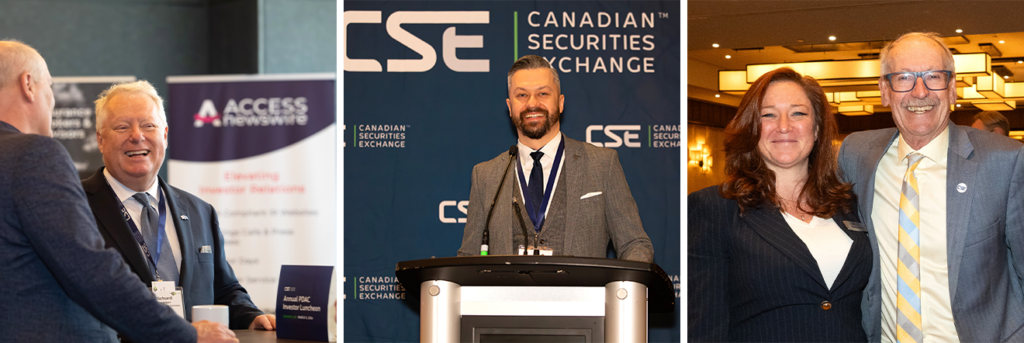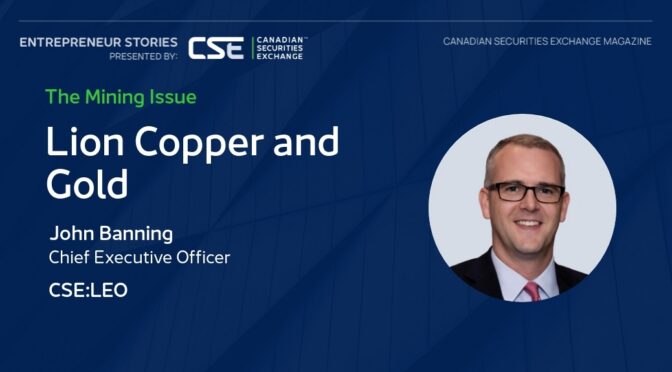
Canadian Securities Exchange Magazine: The Global Issue – Now Live!

Welcome to the latest issue of Canadian Securities Exchange Magazine, your source for in-depth stories of entrepreneurs from a wealth of different industries.

The global capital markets map is being redrawn in real time. Economies are facing an inflection point: never before has the world been more interconnected through technology and trade; however, geopolitical tensions and economic uncertainties have created new barriers to interoperability. Many CSE listed companies are showcasing what happens when innovation refuses to concede to complacency, demonstrating that entrepreneurial vision paired with strategic execution can transcend complex geographic constraints. 

In this issue of Canadian Securities Exchange Magazine, discover the stories of nine CSE listed companies taking on global challenges in defence, healthcare, technology, and beyond. Plus, WFE CEO Nandini Sukumar shares how the global network of exchanges enables innovation and sustainability around the world, and we spotlight National Stock Exchange of Australia Managing Director and CEO Max Cunningham.

The CSE listed companies featured in this issue include:

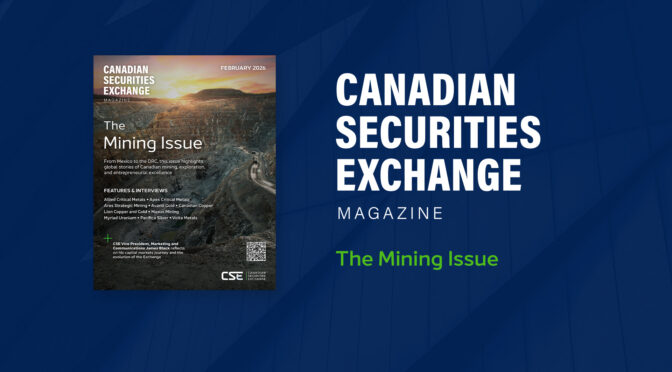
Check out The Global Issue of Canadian Securities Exchange Magazine here:

Canadian Securities Exchange CEO Richard Carleton Year-End 2025 Interview

2025 was a pivotal year for capital markets and for the Canadian Securities Exchange. Canadian equity markets were shaped by a mix of global trends carrying over from the previous year and some new drivers closer to home. While stocks in the United States moved higher on continuing excitement around technology, many Canadian stocks benefited from rising prices for gold, silver, copper, and more, concrete acknowledgement of national requirements for critical minerals. Policies from new governments in both Canada and the U.S. also played a role.

This macro environment brought a variety of opportunities for issuers on the CSE, as a glance at the much stronger capital-raising numbers for 2025 can attest. Meanwhile, the CSE team identified opportunities overseas, acquiring the National Stock Exchange of Australia (NSX), an exchange that looks very much like its early self.

In this interview conducted in early December, CSE Chief Executive Officer Richard Carleton discusses market performance in 2025, touches on upcoming regulatory changes, takes readers inside the NSX transaction, and highlights some of the factors set to influence small-cap stocks in Canada during 2026.

The pace of traditional IPOs in Canada was slow again in 2025, while things seemed to pick up in the United States as the year went on, thanks largely to investor interest in the technology sector. What are the headwinds facing the domestic listing environment, and how is 2026 setting up for IPOs and other types of new listings?

As a result of the uncertain nature of the trading relationship with the U.S. and clouds on the horizon for the continued existence of the North American free trade zone, it is fair to say that business investment in new and existing enterprise in Canada was restrained for much of 2025 across most industry groups.   

The Canadian Securities Exchange, of course, is mostly focused on the small-cap sector, and the relative paucity of new listings for much of the year reflected the uncertainty in the broader market. That said, it has to be acknowledged that the large-cap indices are either at or near record highs. So, what is happening?

First, the IPO is not a means that companies, large and small, are using to go public in Canada at this point. Instead, companies are raising money privately through prospectus exemptions and then qualify the securities for a public listing through a non-offering prospectus. 

This technique is the predominant means that companies have used, particularly in the mining sector, over the past year and a half to go public on the CSE.

I think it is fair to say that, regardless of where you stand politically, domestic and international uncertainty has not been helpful to the investment climate in Canada.

One sign of this is that even with increasing prices for many commodities, and gold is the shining example, the junior space did not really get much in the way of attention from investors through investment capital or secondary market activity until the fall.

The catalyst appears to have been acquisitions and joint ventures from some of the mid-level producers in Canada, which sparked an immediate increase in trading turnover. It also appears to have facilitated a lot of secondary market financing activity for CSE listed issuers. We have also begun to see a small increase in the number of companies applying to go public on the Canadian Securities Exchange.

But generally speaking, when you talk about the U.S. market in 2025, the story is dominated by a small handful of stocks with a material stake in the AI and quantum computing future. Investors around the world are coming to the U.S. market to take a stake in these businesses. It has not really been much of a market story from a Canadian perspective in either the small-cap or large-cap space.

For existing issuers on the CSE, 2025 was notably better than the previous year, with trading volume higher and financings again growing in terms of total value. Can you walk us through some of the numbers and offer some insight into how the market performed?

As I mentioned earlier, we have seen the beginnings of improvement in the early-stage capital markets in Canada, and in particular for companies listed on the Canadian Securities Exchange. Another positive indicator is that, notwithstanding the challenges I’ve outlined earlier, the pace of financing activity is up over 2024 levels in the number of transactions and significantly higher in terms of dollars raised on a year-to-date basis: over $2.7 billion, compared to $1.45 billion a year ago.

So, we are looking at one of the better years in total capital raised that we have seen in the last three or four. And the interesting thing is that the mining industry has been responsible for more than half of the transactions and just under half of the capital raised.

As we look to next year, the trendlines are pointing in very positive directions.

The CSE announced the completion of its acquisition of the National Stock Exchange of Australia in October. Let’s first discuss the thought process behind this investment. Is the NSX on a path similar to what the CSE was on a decade ago?

We began speaking to the NSX around 15 years ago, and we noted that it was on a similar trajectory to us: focused on early-stage companies, competing with a well-entrenched incumbent exchange, and struggling to make an impact. 

Indeed, the parallels are almost eerie. The NSX has about 52 listings; we had a similar number in 2010. Prior to the acquisition, the NSX’s balance sheet was challenged (also like us), and it is running the same technology that we integrated in 2005 (and retired in 2016). It hadn’t secured the necessary financial backing to execute the plan we delivered in Canada. With the capital we stockpiled (largely as a result of the trading and listing boom during the pandemic), we had the balance sheet strength to provide NSX with the support it has lacked to deliver a competitive venture market in Australia. 

We believe the Australian market has many similarities to Canada. It generates a lot of new companies on an annual basis from the mining, technology, and life sciences sectors. And we also know there are a lot of companies listed on the incumbent exchange in Australia that find it expensive and difficult to retain their public listing.

The prize is that there is a very healthy retail and institutional capital market in Australia with an appetite for investment in early-stage companies. We believe that by positioning the NSX as a marketplace that serves the interests of investors and companies in the early-stage space, we have a chance to support a significant portion of the early-stage financing opportunities in Australia in a relatively short period of time.

We have a team that is deeply experienced, with many years of working in the capital markets in Australia and abroad. With time, energy, and the balance sheet issues corrected, the NSX team has an opportunity to make a significant positive impact on capital markets in Australia.

What are next steps in helping the NSX to realize its potential? How can the CSE’s experience growing its capabilities and listings over the past decade contribute to the NSX’s success?

It’s a great question in the sense that it has to do exactly what we did. The playbook does not have to be rewritten, just dusted off. The first thing – and none of these is more important than the other – is to put a new technology platform in place that is up to the needs of not only a growing exchange and a growing list of companies on the NSX but also provides trading competition to the ASX for ASX listed stocks.

At the same time, the team needs to be built out, and people need to know who the NSX is and what its value proposition is. It has to engage in the branding work that we did to get people to understand who the NSX is and why it makes sense to list there. Including, of course, the fact that people may know the management team but may not know that it has the balance sheet that ensures its existence.

Those two things are absolutely critical. And the key is to make sure we have the resources in place so that as companies begin to roll in – and it tends to come in as a trickle at first and then as an absolute flood if you are successful working with the early adopters – you have the resources and management systems in place to be able to render a high degree of customer service to those companies.

There would seem to be variation in performance at exchanges, perhaps most recently highlighted by the Cboe operations in Canada and Australia being put up for sale. How would you explain the differences in objectives and each entity’s ability to achieve them?

Even when really well run, exchanges operating cash equities markets, such as the Canadian Securities Exchange, Cboe Canada, Nasdaq Canada, Tradelogiq, Toronto Stock Exchange, or Toronto Venture Exchange, do not generate the kind of financial return that derivatives exchanges generate. That is why two of the largest exchange groups in the United States are the CME Group and the Intercontinental Exchange, the latter of which not only owns the New York Stock Exchange but also operates a number of commodity futures exchanges in the U.S.

The derivatives exchanges, because they are natural monopolies and control the clearing and settlement agency – it is a whole soup-to-nuts operation – generate consistently higher profits than those engaged in our line of work in the cash equities space.

We have seen a number of the large global operators – whether it be Deutsche Börse, Euronext, or London Stock Exchange Group – diversify away from the cash equities side and invest in derivatives markets. In addition, these large operators are also investing in the development and distribution of market data products, risk applications, and analytics. These are the kinds of information services that generate monthly subscription-based revenues and are sticky enough that you can forecast these revenues in two-to-five-year time frames.

That is one of the other issues with cash equities: we are subject to the vagaries of government policies, the interest rate environment, market sentiment, and so on. When times are good, we can operate quite profitably. But, through no fault of exchange management, markets can be bad, materially impacting returns without regard to the quality of exchange management.

Without knowing exactly why the Cboe made the decision they did in Canada and Australia, it is my educated guess that those businesses hold considerably lower return potential than some of the other opportunities they might have, and I think they concluded that further effort to grow those businesses could be applied to other businesses in their portfolio to generate higher returns.

We discussed earlier that fewer IPOs are taking place, yet the number of trading platforms in Canada seems to be growing. Is there a point at which adding more execution venues goes from enhancing competition to actually making markets less efficient?

That is an interesting way of looking at it. I think our customers, if you consider the investment dealers and certainly the investors that are using the system, would say they find the current system opaque, complicated, hard to understand, and from a dealer perspective, it increases the level of risk because there are many rules around how you try to ensure client orders are directed to the best-priced destination. The more venues there are with different order types and layers of connectivity and everything else, that obviously complicates and adds a degree of risk to those responsibilities.

I can’t say I know at what point competition becomes self-defeating in the space. What I will say is that on a per-capita basis, whether it is market capitalization, turnover, or any other measure you want to suggest, Canada seems to support more trade execution venues than any other market in the world. We have about one-third the number the U.S. has. With anything in finance, 10 to 13 times is the normal range between Canada and the United States. So, if we are one-third, that speaks volumes.

I suppose the other way to look at it is that in deciding where to invest our funds, we have obviously concluded that Australia is a potentially more interesting location than here in Canada, given the opportunities we believe exist to grow business there rapidly. The competitive pressure in Canada would probably prevent the rapid expansion of any one business at this point.

Important discussions have been taking place in the policy environment in 2025. The concept of broadening eligibility for Scientific Research and Experimental Development (SR&ED) tax incentives to Canadian public companies is gaining attention. There is also talk of modifying standards to lessen the requirements around quarterly financial reporting. Is the CSE supportive of such initiatives? Are there any caveats to be mindful of?

Before I answer the question directly, what I will say is that these efforts are indicative of a level of engagement from policymakers, government officials, and regulators to try to reduce the decline in the number of companies coming into the public markets.

It is like the stages of recovery, where admitting you have a problem is the first step. I think that realization has taken hold at every level of government. What we are seeing is a genuine effort from the regulators, as well as from the policymaking side of government, to see what can be done to improve the lot of public companies and reduce the expenses for companies to access public capital for growth purposes.

The measures mentioned in the question are two of many initiatives we are going to see in 2026. SR&ED for public companies has long been an obvious change to make. Consider a Canadian-controlled private company versus a small company listed on a Canadian exchange doing business in Canada and hiring Canadians – there is, frankly, no difference between those companies. Why does the private company qualify for SR&ED while the public company does not? So, we are obviously supportive of the changes the government is proposing.

Similarly, talk has been going on for a long time about reducing the reporting cycle for companies from quarterly to semi-annual. To be honest, we have changed our mind on the issue. We have been opposed over the years on the basis that early-stage companies should report key financial data on a quarterly basis – in particular, how much money they have on the balance sheet, what their burn rate is, and when they are likely going to have to raise additional capital to keep their project going.

We will be commenting on the proposals from Canadian securities regulators to implement a pilot program to move to semi-annual reporting for qualified companies, many of which are on the Canadian Securities Exchange. Our suggestion is that there be enhanced cash flow statements required on a quarterly basis, but that there is no need for the management discussion and analysis and the full financial report that is currently required.

We will be working with regulators to identify other areas we believe can and should be addressed at the federal and provincial levels to augment both the number of companies and to reduce the cost of capital for public issuers in Canada.

CSE executives have visited several overseas jurisdictions this year. What were your objectives, and is there anything to highlight from a global perspective for junior markets as we head into 2026?

Generally, when we travel with issuers internationally, it is because we are trying to understand how they are raising money overseas and what we can do to facilitate that process. We have seen over the years that, in some cases, there has been resistance to investing in companies listed on the Canadian Securities Exchange from investors in Europe or Asia or the United States because they don’t know who we are.

Consequently, we have to get out there and explain to the right people, so they understand who we are, the value proposition we represent, and that the organization is populated by executives with deep experience in the public capital markets in Canada.

It is less often that we are looking to recruit international companies to the Canadian market. Although that was certainly a focus during the cannabis days, when companies could not access capital locally and had to come to Canada to take advantage of those opportunities.

At this point in the cycle, we are looking to see where the issuers are going, who they are talking to, and what barriers we need to break down, all with a view to supporting their capital-formation efforts.

Specifically, gold exploration companies have historically found an audience in the German-speaking parts of Europe. We have taken steps to ensure they understand the benefits of a quotation in Frankfurt and some of the off-exchange trading platforms in Europe that are popular with retail and institutional investors.

Also, there are certain brokers who cover the family offices, private banks, hedge funds, and high-net-worth investors in these countries. We need to work with them to make sure they have appropriate levels of connectivity to the Canadian Securities Exchange so that when they have a CSE company showing them an investment opportunity, they know how to trade the stock once they become a shareholder.

That is why we travel internationally, and what we have learned this year is that with gold at more than US$4,000 per ounce, there is a lot of interest in the securities of Canadian early-stage exploration companies. We believe macroeconomics will support a continuation in the increase in the price of gold, so this is not a flash in the pan but rather a trend that will continue to play out over the next several years.

Tokenization of publicly listed securities is gaining attention once again. Based on the CSE experience, where do you see this working, and what are the pitfalls?

The question is always: what problem are you trying to solve with tokenization? If you ask 20 people at a blockchain conference, you’ll probably get 25 different answers as to why it makes sense to tokenize aspects of the securities industry.

There are people who believe on-chain public equities that are tokenized will immediately present instantaneous execution, 24-hour trading, your finances can be completely self-directed, you can have the securities in your wallet on your phone, etc. I don’t buy that for a second.

The systems and structures that have been built for traditional finance are there for a reason. They are there to solve the problems that decentralized finance, underlying crypto trading is wrestling with. I am talking about things like security, assurance that your trade will settle properly, that you will get the cash you expect, and that you will get the securities you purchase delivered in a certain way. There is an enormous investment in infrastructure to be able to provide those solutions for investors.

As I say, I am not in agreement with people who are thinking that these technologies will totally disrupt the existing frameworks of the securities industry. I don’t see that happening.

Now, there are benefits to using tokenization for real-world assets. It has the potential to increase the visibility for companies as to who their beneficial owners are, which means they can improve shareholder relations and competitive analysis compared to their peers.

If you are a musician, for example, and you have monetized your catalogue into a tokenized fund listed on an exchange, then if you find out who is holding your tokens, you can send them information about tickets to your upcoming concert, or you can drop new music you have coming out. There are all kinds of ways you can engage with your existing shareholders using the technology.

In Canada, the ability to quickly adopt a number of these innovations is probably going to be frustrated by the clearing and settlement system that we currently have in place. The United States appears to be moving fairly quickly, with Nasdaq and the Depository Trust & Clearing Corporation (DTCC) looking to provide a tokenized securities rail in the relatively near future. I think we are talking one and a half to two years at this point, and that will enable people to clear and settle and have custody arrangements effectively on a private blockchain that will be provisioned by DTCC. That way, people can opt into the system. It will be interesting to see what percentage of stock trades choose to settle down those channels.

Instead of doing a big bang, they are letting people drive the transition process, assuming there is a transition from where we are today to using more tokenization in the traditional finance space.

Let’s close with a look forward to 2026. What other initiatives does the CSE have planned for next year, and how do you foresee capital markets evolving to enable you to make the most of that vision?

A lot of my time is going to be focused on working with our Australian colleagues building out the proposition with the NSX. From an economic perspective, clearly, the uncertainty in Canada’s trading relationship with the United States will continue. I think it would be unlikely that the Americans will seriously engage with an extension to the free trade agreement. That would have some meaningful consequences, and we are already seeing them, of course, on investment in traditional manufacturing in Canada. We are likely to see the President continue to push for cheaper money, which, without the fundamentals to support it, will see a relative decline in the U.S. dollar. That will continue to put upward pressure on the price of gold, and I believe will focus more and more investment on the precious metals exploration space in Canada.

Similarly, we will see people beginning to think more clearly and strategically about how to supplant China in the supply chain for the so-called critical minerals. It is becoming plain that it has to be both public and private sources to not just invest in the companies that will find the rocks and advance the projects toward production, but projects need power, they need roads, they need rail, they need processing facilities and smelters, and they need port facilities to ship products to international markets. We are talking about billions and billions in investment in infrastructure. And those are the sorts of things that pension funds are good at, especially in partnership with government.

The public markets will supply the capital to the exploration companies identifying commercially significant discoveries, and also fund the eventual development of producing mines for these commodities.

I think that is going to be a continued theme in 2026. Canada is going to start to get its act together. We are going to begin to see more investments being made to advance that vision and those projects. Ultimately, this is positive for the public markets because we will be key partners in this economic development.

#AlwaysInvested

2025 Year-End Rewind

January Highlights

As 2025 comes to an end, we’re sharing our favourite highlights from another incredible year at the CSE. In January, we hit the ground running with a strong presence at VRIC, hosted our signature Mining Over Canada Reception, joined global financial market leaders on the slopes of the Italian Alps, and released our first podcast episode of the year.

VRIC 2025

The Vancouver Resource Investment Conference (VRIC), presented by Jay Martin, President and CEO of Cambridge House International, returned on January 19-20 for another memorable year.

The CSE was pleased to exhibit at and connect with friends old and new at this renowned mining event, which featured over 100 expert speakers, a dynamic tradeshow and exhibition, and valuable networking opportunities.

Beyond the trade floor, we took part in the panel, “List Local, Trade Global: The Pubco Opportunity in Challenging Markets,” which was moderated by the CSE’s Anna Serin and featured the CSE’s James Black and Jason Paltrowitz from OTC Markets Group.

Plus, we had the opportunity to distribute copies of the special VRIC edition of Canadian Securities Exchange Magazine.

And it was great to catch up with CSE listed issuers also in attendance:

View the Album: VRIC 2025 Highlights

The CSE’s Mining Over Canada Reception

Back and better than ever, the CSE’s annual Mining Over Canada Reception was once again a standout highlight of VRIC.

Held at the historic Vancouver Club, the signature CSE event brought together issuers and members of the capital markets and mining communities for a night of lively conversations, outstanding food and drinks, and great company.

We are appreciative to everyone who joined us, as well as our event sponsors, Morton Law LLP, MNP, Haywood Securities, Kitco Mining, Odyssey Trust Company, Business Television (BTV), and Venture Liquidity Providers.

View the Album: Mining Over Canada Reception Highlights

Interbourse 2025

CSE CEO Richard Carleton hit the slopes in the Italian Alps for the 56th edition of Interbourse, an event we were proud to sponsor.

It was a fantastic week of connection, camaraderie, and competition in beautiful Courmayeur, Italy, as Richard gathered with representatives from exchanges, clearing firms, institutional brokerages, trading firms, and financial technology firms from around the world.

A big kudos to Team London for hosting this year’s festivities!

The Exchange for Entrepreneurs Podcast: 2024 Recap

We kicked off 2025 with a special episode of The Exchange for Entrepreneurs Podcast with the CSE’s Anna Serin and Bruce Campbell from StoneCastle Investment Management.

In this episode, they discussed what happened in the capital markets in 2024, including gold performance, interest rates, technology, cannabis, and financing trends, and previewed what to look out for in 2025, such as sector rotation and the impact of U.S. and Canadian politics.

Watch Now: Anna Serin and Bruce Campbell Recap the 2024 Markets | The CSE Podcast E6-S4

Market Open: Women in Mining BC

The CSE was pleased to welcome the Women in Mining BC (WIMBC) board of directors to open the market from our Vancouver office and to speak to director Sarah Martin about the work being done by WIMBC to foster connection and inspiration within the diverse mining workforce in British Columbia.

Watch Now: Women in Mining BC Opens the Market | January 28, 2025


February Highlights

In February, we travelled to Atlantic City for The Microcap Conference, published the 2025 edition of The Mining Issue of our magazine, released new episodes on our existing and brand-new podcast, spoke at the Urbana Private Equity Investor Day Conference, and swapped toques for sunglasses during a productive visit to Miami, Florida.

The Microcap Conference

The Microcap Conference, organized by DealFlow Events, returned for another highly anticipated edition in Atlantic City.

Now the largest independent microcap conference in the U.S., this event welcomed microcap companies, investors, and deal-makers from across a wide range of sectors. We enjoyed exploring topics critical to the microcap community and catching up with CSE listed issuers, FendX Technologies (CSE:FNDX) and Railtown AI Technologies (CSE:RAIL), all against the exciting backdrop of America’s Playground.

View Highlights: The Microcap Conference 2025

Canadian Securities Exchange Magazine: The Mining Issue

In this year’s Mining Issue of Canadian Securities Exchange Magazine, we feature six Canadian companies that are leaning into innovation and expertise to meet global demand for strategic minerals, precious metals, and greater energy supply.

Plus, we spotlight exclusive insights from top mining experts and CSE Director of Listings Development Phillip Shum, who shares his journey to the Exchange, views on capital markets, and tips for companies going public.

The companies featured in this issue are: 

Read the Issue: Canadian Securities Exchange Magazine: The Mining Issue March 2025

The Exchange for Entrepreneurs Podcast: S4-E7–E10 “Mining Market Outlook”

At this year’s Vancouver Resource Investment Conference (VRIC), the CSE sat down with four prolific mining and investment industry leaders to get their perspectives on trends and forces shaping the markets.

On this “Mining Market Outlook” series on The Exchange for Entrepreneurs Podcast, we dive into gold, ESG, and more with Miles Franklin President and CEO Andy Schectman; Rule Investment Media CEO Rick Rule; Pan American Silver and Equinox Gold Chairman Ross Beaty; and Exploration Insights Founder and Senior Advisor Brent Cook.

View the Playlist: The Exchange for Entrepreneurs Podcast

The Market This Month: S1-E1

The CSE, in partnership with Stockhouse, was proud to launch the inaugural episode of The Market This Month. In this debut episode, the CSE’s Anna Serin teams up with financial expert Bruce Campbell from StoneCastle Investment Management to explore the latest trends in junior and small-cap markets – from the evolving impact of tariffs and trade dynamics to emerging opportunities in the resource and energy sectors.

Watch Now: Tariffs and Trade Tensions on The Market This Month | S1-E1

Urbana Private Equity Investor Day Conference

At Urbana Corporation’s (CSE:URB) fourth annual Urbana Private Equity Investor Day Conference, CSE CEO Richard Carleton spoke about capital formation on the CSE; highlights from 2024 and what’s coming next at the CSE, including global outreach and integration and strategic investments; and his outlook on crypto, gold, and more.

Watch Now: Richard Carleton, CEO, CSE | Urbana Private Equity Investor Day 2025

Going Public and Raising Capital in Canada (Miami)

The CSE team was pleased to connect with entrepreneurs and capital markets leaders in Miami Beach, Florida, for another fantastic Going Public and Raising Capital in Canada session.

Co-hosted by Corporate Counsel, this year’s Going Public and Raising Capital in Canada featured a stellar lineup of expert speakers who provided their perspectives on current market conditions and the opportunities to access public capital in Canada. CSE CEO Richard Carleton also delivered a timely presentation entitled “Why Canada?”

Special thanks to Michael Bluestein from Corporate Counsel as well as to Maruf Raza from MNP, Danielle Fernandes from Bantr, Jeff Swinoga from Exploits Discovery (CSE:NFLD), Michael Astone from ArcStone Securities and Investments, Joe Fars from Red Cloud Securities, and Miranda Werstiuk from Monetary Metals.

View the Album: Going Public and Raising Capital in Canada (Miami 2025)

Mines and Money Miami

Following our Going Public event, the CSE team attended Mines and Money Miami in the city’s vibrant downtown. Here, connecting with attendees in the mining financing ecosystem and catching up with exhibiting CSE listed issuers, American Pacific Mining (CSE:USGD), American Tungsten (CSE:TUNG), and Exploits Discovery (CSE:NFLD).


March Highlights

In March, we joined our colleagues in preparing for a legendary mining convention, embarked on our annual PDAC event circuit, hosted networking sessions with peers from Canada and around the globe, and rang the bell for gender equality.

Red Cloud Pre-PDAC Mining Showcase

To help us gear up for PDAC, Red Cloud Financial Services, in partnership with PearTree, hosted the annual Pre-PDAC Mining Showcase.

Our team enjoyed having insightful conversations with mining industry peers as well as catching engaging presentations from CSE listed issuers in attendance, including Foremost Clean Energy (CSE:FAT), Kobrea Exploration (CSE:KBX), Mustang Energy (CSE:MEC), and Nova Pacific Metals (CSE:NVPC).

View Highlights: Red Cloud Pre-PDAC Mining Showcase 2025

PDAC 2025

As always, the PDAC Convention, organized by the Prospectors and Developers Association of Canada, was incredible! 

The CSE team had a fantastic time connecting with the mining and exploration community, investors, business leaders, and government representatives from around the world.

Plus, the Exchange was well-represented at this year’s show, with nearly 30+ CSE listed companies exhibiting and participating in the myriad networking events throughout this conference, including:

Thank you to everyone who stopped by our booth, attended one of our many events, or helped make this year’s show one of the best for us and our issuers.

And be sure to revisit The Mining Issue of Canadian Securities Exchange Magazine ahead of PDAC 2026.

View the Album: PDAC 2025

CSE PDAC Investor Luncheon

We were also proud to host another successful PDAC Investor Luncheon. It was a pleasure to bring together members of the mining, investment, and capital markets communities for company presentations, insights, and spectacular networking over a delicious meal.

A big thank you to everyone who attended, the CSE listed issuers and presenting companies that shared their stories, and our sponsors, ACCESS Newswire, DSA Corporate Services, Endeavor Trust, Investor.Events, Independent Trading Group (ITG), Lebeuf Legal, Marrelli Support Services, Market One, Marrelli Trust Company Limited, MNP, OTC Markets Group, Paul Benwell & Associates (PBA), Purves Redmond Limited, Venture Liquidity Providers, and Vested.ca, for supporting this incredible event.

View the Album: CSE’s PDAC Investor Luncheon 2025

Australia Meets Canada Luncheon

This year’s PDAC Australia Meets Canada Luncheon was a big success. It was exciting to gather with friends and colleagues over a delicious meal from Rosie’s Burgers, part of the Happy Belly Food Group (CSE:HBFG). 

Our first year as members of The World Federation of Exchanges, we enjoyed sharing insights from recent travels down under and the expanding global trading platforms that are creating new access between our markets.

View Highlights: Australia Meets Canada Luncheon 2025

Mangia Bevi Festa

Our ever-popular exclusive PDAC networking event, Mangia Bevi Festa, returned to the impressive Pilsner Hall at Steam Whistle Brewing in Toronto.

Presented in partnership with MNP, Aird & Berlis LLP, and Alliance Advisors, it was great to connect with friends old and new in the mining and capital markets spaces over great food and drinks.

View Highlights: Mangia Bevi Festa 2025

Ring the Bell for Gender Equality: Market Open With the World Federation of Exchanges

We commemorated International Women’s Day with a special opening bell ceremony in support of the 11th annual Ring the Bell for Gender Equality campaign. This global initiative, backed by the World Federation of Exchanges, promotes the empowerment of women and girls in the financial sector and beyond.

“The CSE fully supports the removal of historic gender pay gaps and ensuring that ‘glass ceilings’ preventing the advancement of women are permanently shattered,” noted CSE CFO Mary Anne Palangio at the ceremony.

We’re proud to share that 49% of CSE staff are women, with 43% holding senior leadership positions.

Watch Now: CSE Rings the Bell for Gender Equality | Monday, March 10, 2025


April Highlights

 In April, we reached a major milestone, released a new episode of our podcast, held a special market open, travelled to the ever-exciting Las Vegas, met Capital Markets Mongolia in New York, and debuted our Summit on Responsible Investment content series.

CSE Listings Now Eligible for Trading on Interactive Brokers

In April, we were proud to announce that all CSE listed securities are now eligible for trading on the Interactive Brokers (IBKR) global platform, which will increase liquidity, enhance price discovery, and support capital formation activities by CSE issuer companies.

“This milestone underlines the growth and success of the CSE and our commitment to support the expanding objectives of our issuers and investors,” said CSE CEO Richard Carleton. 

IBKR is an award-winning, low-cost, automated electronic broker with approximately 3.6 million client accounts and nearly 3.5 million daily average revenue trades.

“Interactive Brokers offers access to over 160 markets worldwide, competitive pricing, and advanced trading technology,” said Interactive Brokers EVP of Marketing and Product Development Steve Sanders. “The addition of CSE listed securities expands our broad range of investment products, empowering clients to further diversify their portfolios, and underscores our continued commitment to supporting investor access to Canadian markets.”

Thank you to the team at Interactive Brokers Canada for adding CSE securities to your platform!

Read Now: Press Release: Canadian Securities Exchange Listings Now Eligible for Trading on Interactive Brokers Platform

Chris King on The CSE Podcast

On this episode of The CSE Podcast, the CSE’s James Black sat down with OTC Markets Group Senior VP Chris King to break down the launch of the OTCID tier, including SEC Rule 15c2-11 and the discontinuation of the Pink Current tier, the features of this new platform, and next steps for Canadian-listed companies to maintain access to U.S. investors and trading platforms.

Watch Now: Chris King on the OTCID Evolution for Pink Securities | The CSE Podcast E12-S4

Market Open: Canadian Cancer Society

To mark the close of Daffodil Month, a national campaign that raises awareness and support for cancer research, prevention, and care, the CSE had the pleasure of hosting the Canadian Cancer Society (CCS) as they opened the market at our Toronto office, which included speeches from cancer survivors, Charles Petersen and Steven Hodges, and CCS EVP Sara Oates.

Watch Now: Canadian Cancer Society Opens the Market | Daffodil Month 2025

Planet MicroCap Showcase: VEGAS 2025

It was great to return to the entertainment capital of the world as a sponsor at Planet MicroCap Showcase: VEGAS 2025, produced in partnership with MicroCapClub, which took place at the famed Paris Las Vegas Hotel & Casino. 

As always, we enjoyed learning about emerging trends, connecting with leaders in the microcap investment community, and catching up with American Aires (CSE:WIFI), who gave a stellar presentation.

View Highlights: Planet MicroCap Showcase: VEGAS 2025

Mongolia Investment Forum: New York 2025

We were pleased to have the unique opportunity to explore Mongolia’s opportunities in banking, renewables, and critical minerals at the Mongolia Investment Forum: New York 2025

Hosted by Capital Markets Mongolia, the event took place in the Well& by Durst at One Five One event space in New York City and convened global investors, policymakers, and business leaders.

View Highlights: Mongolia Investment Forum: New York 2025

Summit on Responsible Investment 2025 Series Debut: Earth Day Interview With RootMaker

The CSE hosted the third annual Summit on Responsible Investment (SoRI) in June 2025. Leading up to the Summit, we recorded a series of exclusive interviews and pre-event content, including a special interview in celebration of Earth Day.

RootMaker Products Company CEO Jim Duggan joined the CSE’s Anna Serin for a conversation on how healthy roots lead to healthier trees, how RootMaker products reduce seedling mortality from over 85% to just 5%, and their vision for replacing single-use plastic in planting systems.

View Highlights: Revolutionizing How Trees are Grown – An Earth Day Special | SoRI 2025


May Highlights

As the new year approaches, we’re reflecting on the defining moments that shaped 2025 for the Exchange. In May, we published The Technology Issue of our magazine, attended the inaugural Web Summit Vancouver, took to the stage at the Okanagan Angel Summit, and returned to the Critical Minerals Institute Summit in Toronto.

Canadian Securities Exchange Magazine: The Technology Issue

In this year’s Technology Issue of Canadian Securities Exchange Magazine, we featured six CSE listed technology companies leveraging AI and nanotech to transform everyday systems that improve our health, well-being, and livelihoods.

This edition also includes insights from CSE Event & Content Manager Melissa Robertson, who shared her capital markets journey and insights into the CSE’s thoughtfully curated content mix and events calendar.

Companies featured in this issue include:

Read the Issue: Canadian Securities Exchange Magazine: The Technology Issue

Web Summit Vancouver

The first-ever Web Summit event in North America took place in Vancouver, and the CSE was pleased to attend.

This premier technology conference brought together entrepreneurs, investors, media, and industry leaders from around the globe to exchange ideas and explore the trends shaping our future. We had an incredible time connecting with the tech community and learning from some of the industry’s leading experts.

And thank you to everyone who attended our CSE Tech Connect at JOSS for an evening of networking and celebrating this milestone event. Special thanks to Endeavor Trust for helping make our event happen.

View Album: Web Summit Vancouver 2025

Okanagan Angel Summit

We enjoyed sponsoring the Okanagan Angel Summit for its seventh edition and attending the live pitch event on May 22 at the Kelowna Innovation Centre.

As Canada’s entrepreneurial exchange, we’re committed to supporting entrepreneurs, dealers, and funders in growing their businesses. That’s why we were proud to sponsor this pitch competition and investment readiness program, powered by Accelerate Okanagan.

It was inspiring to see the participating entrepreneurs and investors put their eight-week training into action during the pitch competition, where investors heard final pitches from six companies competing for a grand prize investment. Plus, CSE Director of Listings Development for Western Canada Anna Serin took the stage at the quarter-finals.

A big congratulations to Mastrius for being named the winner of the $180,000 grand prize, and to Accelerate Okanagan for organizing such an incredible event. 

View Album: Okanagan Angel Summit Finale 2025

CMI Summit IV

The CSE returned to the Critical Minerals Institute (CMI)’s CMI Summit IV at the prestigious National Club in Toronto back in May.

Under the theme “The War for Critical Minerals and Capital Resources,” industry leaders, policymakers, and investors explored the strategic, sustainable, and economic factors vital to critical mineral supply chains.

CSE Vice President of Listings Development James Black delivered a presentation on behalf of the Exchange, and American Tungsten (CSE:TUNG) President Murray Nye and Neotech Metals (CSE:NTMC) Director and CEO Reagan Glazier also took the stage during the event. 

View Highlights: CMI Summit IV


June Highlights

This June, we hosted our third annual Summit on Responsible Investment, launched an insightful video series on CSE TV, partnered with CIRO to host an important session, returned to an exclusive mining event, and capped off the month with a trip to Chicago for a leading cannabis conference.

Summit on Responsible Investment 2025: Highlights from Kelowna

On Thursday, June 5, 2025, the Canadian Securities Exchange hosted the third annual Summit on Responsible Investment (SoRI) in beautiful Kelowna, BC. 

Under the theme “Creating Value, Stewarding Change,” we had a fantastic time connecting with industry leaders, investors, and innovators for keynotes and thought-provoking discussions on the latest in ESG trends and investment opportunities.

Companies leading in CleanTech, Renewable Energy, and Life Sciences took the spotlight, and  a rooftop networking reception provided an exclusive opportunity to connect with professionals shaping the future of responsible investing.

Thank you to our expert guest speakers, Independent Pracademic Dr. Victoria Hurth; Aura Wealth Management Founder Stephen Maser; Cēlandaire Capital Founder and CEO Lida Preyma; BRIDGE© Principal and Founder Siri C. Genik; and Deans Knight CEO Brent Gilchrist for sharing their perspectives, as well as the private companies that joined us to present. 

And a big thank you to our sponsors, Endeavor Trust, Vested.ca, Venture Liquidity Providers (VLP), Stockhouse, Crowe MacKay LLP, Lawson Lundell LLP, as well as our community partner, Accelerate Okanagan, for helping make this event possible. 

A special shout-out to the CSE listed issuers who gave presentations during the event, including:

We’d also like to thank attendees for their generous contributions to the Central Okanagan Food Bank.

View the Album: Summit on Responsible Investment 2025

CSE Listed Issuer Education Session with CIRO

As part of our ongoing series of issuer education initiatives, we were pleased to host a special online session alongside the Canadian Investment Regulatory Organization (CIRO) this June. 

The session provided a unique opportunity for public companies, advisors, and capital markets professionals to hear directly from the teams at CIRO and the CSE about how market supervision works in practice.

From real-time trading surveillance to disclosure standards and enforcement workflows, this session delivered practical insights into how issuers can stay compliant and proactive in today’s regulatory environment. 

Topics covered included:

  • CIRO’s role in real-time market surveillance and trading halts
  • Best practices for mining issuer disclosure (including 43-101 guidance)
  • How CIRO investigates market misconduct and collaborates with regulators
  • New CSE exchange hold and extended hold period policies
  • When and how to interact with CIRO—news pre-filing, surveillance desk, and more

Watch Now: Webinar Replay: CSE Listed Issuer Education Session with CIRO – June 24, 2025

THE Mining Investment EVENT

THE Mining Investment EVENT took place at the Centre des congrès de Québec in Québec City this summer, and the CSE was excited to return as a sponsor of this invitation-only, Tier I global mining investment conference.

We had a fantastic time being in the room with some of the most influential thought leaders in the mining sector and connecting with familiar and new faces.

Plus, several CSE listed issuers were at the event, including:

View the Album: THE Mining Investment EVENT 2025

IgniteIt’s Cannabis Capital Conference

It was great to be back at IgniteIt‘s Cannabis Capital Conference, one of North America’s leading cannabis events.

As always, the space was buzzing with conversations about the current landscape for cannabis entrepreneurs, both newcomers and industry giants alike. We had a fantastic time connecting with key players and exchanging valuable insights, all while enjoying the world-class city of Chicago.

Plus, CSE listed cannabis issuers also participated in speaking engagements during this three-day event, including Cresco Labs (CSE:CL), iAnthus Capital Holdings (CSE:IAN), LEEF Brands (CSE:LEEF), and MariMed (CSE:MRMD).

View Highlights: IgniteIt’s Cannabis Capital Conference 2025


July Highlights

In July, we swung into summer at our annual CSE Open in Toronto, hosted our ever-popular pancake breakfast at the Calgary Stampede, and held a special Market Open in support of Autism Science Foundation Canada

The CSE Open Toronto

It was great swinging into summer at The CSE Open this July!

Our friends and colleagues joined us at the Royal Ontario Golf Club just outside Toronto for our annual golf event, held in support of the Centennial Infant and Child Centre Foundation and Lions Foundation of Canada Dog Guides

Thank you to our premier sponsors, MNP, Independent Trading Group, and The Nuvo Group, and all of our other incredible partners and sponsors, including Dog and Pony Studios, LFG Equities, Gowling WLG, RSM Canada, Purves Redmond, Integral Wealth Securities, ALOE Finance, CEO.CA, Corporate Counsel, Computershare, ArcStone Securities and Investments, North Star Investor Relations, Options Technology, Red Cloud Securities, Native, and Corpay

And congratulations to the winning team of Adam Schmidt, David Archer, Tammy Jurca, and Matt Lee!

View the Album: The CSE Open Toronto 2025

Calgary Stampede 2025

Yahoo! In true CSE tradition, our team dusted off our cowboy hats and headed to the world-famous Calgary Stampede to connect with friends and colleagues at our annual Stampede Breakfast. 

As always, we had a fantastic morning enjoying delicious pancakes and great conversations. 

Until next year!

View the Album: Calgary Stampede 2025

Market Open: Autism Science Foundation Canada 

Ahead of the fourth annual Bay Street Rides FAR, we were pleased to host Autism Science Foundation (ASF) Co-Founder and President Alison Singer and other members of the ASF team for a special market open at CSE HQ in Toronto on July 29.

“Bay Street Rides FAR is a day when fierce competitors become united allies in the fight to understand autism. Whether or not you have a personal connection to autism, everyone is welcome to join or support,” shared Alison Singer, who provided insights into the work the organization is doing and its fundraising event, Rides Far.

Until next year!

Watch now: Bay Street Rides FAR for Autism Research in Toronto


August Highlights

This August, we released the latest Precious Metals Issue of Canadian Securities Exchange Magazine, launched our first-ever Western Market Open, and capped off the month with a client appreciation golf day in Québec.

Canadian Securities Exchange Magazine: The Precious Metals Issue

In the latest Precious Metals Issue of Canadian Securities Exchange Magazine, we featured seven CSE listed companies that are pursuing breakthrough discoveries and deploying innovative strategies to unlock value across North America’s top-tier mining jurisdictions.

The issue also featured an interview with CSE Director of Strategic Planning & Brand Development Renée Colyer, who provided insights into her journey to the Exchange and the CSE’s business strategy and branding.

Companies featured in this issue include:

Read the Issue: Canadian Securities Exchange Magazine: The Precious Metals Issue

CSE Western Market Open: VanCap Rising Leaders

This August, we officially launched the CSE Western Market Open, hosted in partnership with Market One

To celebrate this milestone, we were joined by the VanCap Rising Leaders, a community of young professionals shaping the future of Canada’s capital markets by building connections across legal, audit, brokerage, and market-making roles.

This new initiative gives CSE listed issuers and the broader markets community in Western Canada more opportunities to connect, celebrate milestones, and strengthen networks.

Watch Now: VanCap Rising Leaders Ring the Bell at the First CSE Western Market Open

11th Annual Summer Golf With the CSE

We closed out a successful August with the 11th annual Summer Golf With the CSE at the Mount Bruno Country Club in Saint-Bruno-de-Montarville, Québec.

Our friends and colleagues from across the capital markets joined us for a fun day of golf, followed by cocktails and dinner. 

A big thank you to our event partners, MNP, Fasken, and PBA, and to everyone who joined us in making this year’s event a hole in one.

View Highlights: 11th Annual Summer Golf With the CSE


September Highlights

This September, we closed out the 2025 golf season with one more round of friendly competition in Vancouver, travelled to beautiful Colorado for the Precious Metals Summit, rode our bikes for an important cause, hosted another insightful Going Public event, and took part in a panel during the ArcStone-Kingswood Growth Summit.

The CSE Open Vancouver

The Vancouver edition of our client-appreciation golf tournament, The CSE Open 2025, was the perfect send-off for summer.

We went back to the beautiful Gleneagles Golf Course in West Vancouver this September for a day of networking, camaraderie, and friendly competition. Plus, we were proud to once again support Family Services of the North Shore.

A big shout-out to our premier sponsors, DuMoulin Black LLP, as well as our other valued sponsors, MNP, Endeavor Trust, Haywood Securities Inc., Market One, Treewalk, Investor.Events, Venture Liquidity Providers, and Dog and Pony Studios.

Thank you to everyone who joined us, and congratulations to the team of Aydin Asli, Mark Caplan, Richard Carleton, and Salim Dhanji for taking home the win!

View the Album: The CSE Open Vancouver 2025

Precious Metals Summit Beaver Creek

This September, we returned as a sponsor to the Precious Metals Summit at the mountainside Beaver Creek Resort in Colorado. 

Set against stunning backdrops, this year’s edition featured insightful corporate presentations, as well as opportunities to connect with the mining investment community and CSE listed issuers in attendance, including: 

A special thanks to Max Cunningham from the National Stock Exchange of Australia (NSX) for joining us at the CSE/NSX Reception and VIP Dinner, and a big thank you to Gowling WLG, Endeavor Trust, and MNP for sponsoring this year’s reception and to everyone who joined us.

View the Album: Precious Metals Summit Beaver Creek 2025

Bay Street Rides FAR

Bay Street Rides FAR was back for another impactful year, and the CSE was proud to once again participate alongside Toronto’s financial community.

It was great to see such a fantastic turnout for this family-friendly day of walking and biking in support of Autism Science Foundation Canada.

A big thank you to everyone who donated through the CSE page and joined us during the event.

View Highlights: Bay Street Rides FAR 2025

Going Public and Raising Capital in Canada

We celebrated another successful Going Public and Raising Capital in Canada event this September. CSE Director of Listings Development Phillip Shum and Senior Advisor of Listings Development Scott Pritchard had a wonderful time catching up with friends old and new in Halifax, Nova Scotia.

During the event, our lineup of expert speakers, George Huang from MNP, Raj Ghosh from Lebeuf Legal, Bill Zawada from Laurel Hill Advisory Group, Seamus Byrne from MI3 Communications Financières, and Zed Wang from Ferrum CPA Professional Corporation, shared insights into the public markets in Canada.

Special thanks to our sponsors MNP, Lebeuf Legal, Laurel Hill Advisory Group, MI3 Communications Financières, and Ferrum CPA Professional Corporation (FE).

View the Album: Going Public and Raising Capital in Canada 2025

ArcStone-Kingswood Growth Summit

The Exchange was thrilled to be back at this year’s ArcStone-Kingswood Growth Summit as both a sponsor and panelist.

From IPO readiness to new tech frontiers to what’s driving the junior mining markets, the agenda was packed with insights and perspectives on the stories shaping the capital markets of today and tomorrow.

CSE CEO Richard Carleton had the pleasure of speaking on the panel, “IPO or RTO Readiness,” moderated by Gowling WLG Partner Peter Simeon, alongside fellow speakers, ArcStone Securities and Investments CEO Michael Astone, Purves Redmond Limited Partner Mert Guler, and MNP Partner and Regional Leader, Public Companies George Huang.

Plus, we had a wonderful time connecting directly with growth-stage entrepreneurs and other capital markets leaders throughout the day and at the reception.

View the Album: ArcStone-Kingswood Growth Summit 2025


October Highlights

This October was a historic month for the CSE, as our parent company completed its acquisition of the National Stock Exchange of Australia. Plus, we travelled to New York City to host the Global Markets Forum, rang the bell for financial literacy, and joined fellow members of the World Federation of Exchanges for an important gathering in Istanbul, Türkiye.

Acquisition of the National Stock Exchange of Australia

October was a historic month at the CSE. Our parent company, CNSX Global Markets Inc., completed the acquisition of NSX Limited, parent company of the National Stock Exchange of Australia (NSX).

Through this partnership, the CSE will provide financial, technical, and strategic support to the NSX, working closely with the NSX to elevate its competitive position in Australia and meet the needs of early-stage companies in Australia and beyond.

Additionally, this partnership offers the potential for inter- or dual-listing opportunities across the CSE and the NSX for Australian, Canadian, and global companies. 

“This is a landmark day in the history of the Canadian Securities Exchange, the National Stock Exchange of Australia, and the entire global marketplace for emerging companies,” said CSE CEO Richard Carleton. “With this acquisition, the NSX is positioned to replicate the CSE’s success in Canada and provide Australia with a public market platform that better meets the capital formation and liquidity needs of entrepreneurial firms. We are confident that the NSX is on the cusp of significant growth in corporate listings, to the great benefit of emerging companies and to Australia’s investment community.”

We look forward to strengthening connections between the Australian and Canadian capital markets.

Read More: Canadian Securities Exchange’s Parent Company Completes Acquisition of National Stock Exchange of Australia

Global Markets Forum

We had a fantastic time hosting the Global Markets Forum alongside Aquis Stock Exchange and OTC Markets Group at OTCQX Markets Center in New York.

Thank you to the industry speakers and companies that presented at the forum. Several CSE listed issuers also shared insights, including:

View Highlights: Global Markets Forum 2025

Ring the Bell for Financial Literacy

Aligned with the World Federation of Exchanges’ (WFE) annual “Ring the Bell for Financial Literacy” campaign, we proudly joined exchanges around the world, as well as Michael Porto from the CFA Society Toronto, to ring the bell for financial literacy, highlighting the importance of financial education and informed participation in global capital markets.

Watch Now: CSE Rings the Bell for Financial Literacy | October 9th, 2025

The 64th WFE General Assembly & Annual Meeting

As a proud member of the World Federation of Exchanges, the CSE was honoured to attend the 64th WFE General Assembly & Annual Meeting on October 21-23 in Istanbul, Türkiye.

The General Assembly brings together CEOs and executives from member exchanges worldwide to help shape the future of global markets, while the Annual Meeting unites exchange leaders, regulatory authorities, academics, and media experts to discuss major issues surrounding the exchange industry.

CSE Chief Legal Officer and General Counsel & Corporate Secretary Tracey Stern and CFO Mary Anne Palangio represented the CSE and enjoyed participating in key discussions, sharing insights from a Canadian capital markets perspective, and taking in the sights and sounds of Istanbul.

View Highlights: The 64th WFE General Assembly & Annual Meeting


November Highlights

In November, we teamed up with Blue Jays legend José Bautista in support of SickKids Foundation, returned to the Red Cloud Fall Mining Showcase, travelled to Switzerland for an exclusive mining event, connected with the investor community over a cocktail in Montréal, and proudly presented a cheque for a good cause.

Market Close: The Bautista Impact Fund

On October 31, the CSE was honoured to welcome Toronto Blue Jays legend José Bautista for a special market close in support of The Bautista Impact Fund and SickKids Foundation.

Just hours before legendary Game 6 of the World Series, friends of the Exchange came together for an unforgettable afternoon, raising vital funds to help SickKids continue its life-changing work for children and families.

“SickKids is a great hospital. They help families in dire need and save people’s lives every single day. I highly encourage you to go out there and help them as much as you can,” said José Bautista.Thank you to José Bautista, our friends, and sponsors, including Urbana Corporation, Caldwell Securities, Sparx Publishing Group, RSM Canada, Norton Rose Fulbright, Gowling WLG, MNP, and ITG, for rallying to raise vital funding for a good cause.

Watch Now: José Bautista Closes the Market in Support of SickKids | October 31, 2025

Red Cloud Fall Mining Showcase

It was great to be back as a sponsor at the Red Cloud Fall Mining Showcase, presented in partnership with PearTree

CSE Director of Listed Company Services Dimitri Giller and Director of Listings Development Phillip Shum enjoyed connecting with peers in the mining and capital markets communities over two days of keynote presentations and networking opportunities. 

Plus, it was a pleasure to see many CSE listed issuers attend and present, including:

View The Album: Red Cloud Fall Mining Showcase 2025

Precious Metals Summit Zürich

We had a fantastic time in Zürich, Switzerland, attending and sponsoring the Swiss-based independent investment conference, Precious Metals Summit.

This exclusive event brought together select European investors to meet and engage with explorers, developers, and emerging producers of gold, silver, and platinum group metals from around the world.

CSE Director of Listings Development for Western Canada Anna Serin enjoyed connecting with new and familiar faces from the global mining, exploration, and capital markets communities at the conference.

Plus, it was great to catch up with the CSE listed companies attending, including:

View The Album: Precious Metals Summit Zürich 2025

PBA 5à7 Investor Cocktail Event

The CSE team had a wonderful time attending the PBA 5à7 Investor Cocktail event in Montréal this November.

CSE Senior Advisor of Listings Development Scott Pritchard enjoyed presenting news on the acquisition of the National Stock Exchange of Australia and catching up with friends and colleagues in the investor community over cocktails, including CSE listed issuer 55 North Mining (CSE:FFF).

View Highlights: PBA 5à7 Investor Cocktail Event

Cheque Presentation for The Bautista Impact Fund

Following our special market close fundraising event with baseball icon José Bautista in support of The Bautista Impact Fund, the CSE was proud to personally present a cheque of $20,000 to SickKids in Toronto on November 20.

It was an honour to once again be joined by Mr. Bautista for this special occasion, consisting of the cheque presentation and tour of the hospital to see where the proceeds will directly impact.  

Thank you to José Bautista, our friends, and sponsors for helping to raise vital funds to support SickKids in its life-changing work for children and families.

View Highlights: Cheque Presentation for The Bautista Impact Fund

Chris King on Listing Local, Trading Global | The CSE Podcast S4-E4

On the latest episode of The Exchange for Entrepreneurs Podcast, the CSE’s James Black sat down with Chris King, Senior Vice President, International Corporate Services at OTC Markets Group, for an in-depth look at the benefits for CSE listed companies to quote on the OTCQX and OTCQB markets, steps to prepare, reference clients, maximizing the quote, and more.

#AlwaysInvested

Subscribe: Apple Podcasts / Spotify / Stitcher / Google Podcasts / iHeart / RSS

Disciplined, Systematic Development in Newfoundland’s Untapped Gold Frontier

Gold Hunter Resources (CSE:HUNT; OTCQB:HNTRF) is not just another junior explorer with a big land package. It is a team that delivered meaningful shareholder value in 2024 and is now returning to Newfoundland with a fully consolidated district, deep technical leadership, and a strategy rooted in data, geology, and discipline.

At the heart of the company’s plan is the Great Northern Project, a 26,000-hectare district-scale land package running along the Doucers Valley Fault. While nearly 500 historical drill holes exist, they are concentrated in just four small areas. In contrast, 18 gold-bearing trends remain virtually untested. The result is a rare mix of scale, infrastructure access, and near-term upside in one of North America’s most supportive mining jurisdictions.

In 2023, Gold Hunter sold its initial Newfoundland asset to FireFly Metals in a transaction valued at over $30 million. More than $25 million worth of FireFly shares were issued directly to Gold Hunter shareholders, creating immediate and tangible value during a quiet junior market.

But the exit was not the end of the story. Just 5 kilometres from the original ground, Gold Hunter began consolidating an even larger opportunity. Through more than 10 separate transactions with private holders and small operators, the company unified a 50-kilometre trend along the Doucers Valley Fault. This marked the first time this corridor has ever been controlled by a single entity.

The company’s success in quietly acquiring these projects ahead of better-capitalized competitors has set the foundation for something bigger.

The Great Northern Project follows a proven structural template: a major regional fault with multiple mineralized splays, hosted in rocks nearly identical to those at Equinox Gold’s Valentine Project.

“Although this is structurally complex like most mineralized gold systems, our approach is systematic,” says Chief Executive Officer Sean Kingsley. “Once you understand the controls, you can start stringing deposits together. It’s a classic string-of-pearls model.”

That model has worked well at Valentine. Starting with a small initial resource, it was built into a 5-million-ounce system with clear continuity and expanding scale. Gold Hunter sees Great Northern as following that same path, with a more advanced starting point thanks to nearly 500 legacy drill holes, robust geochemical coverage, and district-scale consolidation already complete.

Rather than rush into drilling, Gold Hunter spent three months in 2024 compiling the first full district-scale dataset ever assembled in this region. The team aggregated historic work from over a dozen sources, including past operators, government surveys, and private holders, into a single coherent exploration model.

The database includes more than 36,000 soil samples, 7,700 rock samples, 500 lake and stream sediment samples, 660 till samples, 5,700 mapped outcrops, multiple smaller geophysical surveys, and over 66,000 metres of historical drilling. That effort revealed high-priority trends that had previously fallen through the cracks due to fragmented ownership and limited budgets.

“Now that we’ve compiled the data, we’re layering in geophysics to take it further,” says Kingsley. “The VTEM survey we’re flying over the entire district will help us pinpoint new structural corridors, extensions of known zones, and areas that were never tested properly.”

Gold Hunter’s project is located in one of the most mining-friendly and accessible regions of Canada. Infrastructure is already in place, including hydroelectric power on site, highway access within walking distance, a mill located just over the ridge, and a deep-sea port facility just a few kilometres away.

“These are the things that matter when you’re looking to build value fast,” Kingsley says. “We don’t need to build roads, power lines, or ship ore across the country. We’re right where we need to be.”

In addition, Newfoundland and Labrador offers supportive permitting frameworks, experienced local workers, and a government eager to promote responsible resource development. These are factors that continue to attract serious exploration and development activity across the province.

Unlocking regional-scale gold systems takes more than ground. It takes people who understand how these systems behave.

Gold Hunter’s technical lead, Rory Kutluoglu, brings both geoscience and geophysics expertise and played a key role in Kaminak’s Coffee Gold deposit, which was acquired by Goldcorp for US$520 million. He sees Great Northern as another high-potential system, this time with infrastructure and historical drilling already in place.

On the ground, veteran Newfoundland geologists Tanya Tettelaar and David Copeland offer unmatched local knowledge. Tettelaar spent six years as exploration manager at Marathon Gold, helping advance Valentine through its critical growth phases. Copeland has worked directly on parts of the Great Northern land package for over a decade and was instrumental in building the Goldboro deposit, now part of NexGold.

“This is one of the strongest technical teams I’ve worked with,” says Kingsley. “We’ve got national-level discovery experience and local geological intuition coming together. That’s how you de-risk exploration.”

Kingsley himself has been active in Newfoundland and Labrador since the early 2010s and sees the province as one of the last places in North America where major new discoveries are still possible.

With a past win under its belt, a fully consolidated district, an expansive geological and geophysics dataset, and a proven technical team, Gold Hunter is positioned to help write the next chapter of Newfoundland’s gold story.

The company has completed its initial VTEM survey and is in the midst of ground truthing drill targets for 2025. Every metre will be guided by data. Every target will build on a district-wide vision.

“We’ve done the hard work. Acquisition, compilation, modelling, and survey execution,” says Kingsley. “Now it’s time to drill. And we know exactly where to start.”

This story was featured in Canadian Securities Exchange Magazine.

Learn more about Gold Hunter Resources https://goldhunterresources.com/.

Focused Portfolio and a Smart Business Model Give This Explorer Every Chance at Success

The Western United States has long been one of the world’s most attractive jurisdictions for mineral exploration. The Carlin Trend and other well-known districts provide the prospectivity, while local familiarity with mining and supportive policy give exploration companies comfort that they can realize value from any deposits they might discover.

Headwater Gold (CSE:HWG; OTCQB:HWAUF) is advancing multiple projects in two western states – Nevada and Idaho – and its team could not be happier with what it is seeing.

“There are certainly a lot of tailwinds for the mining industry in the western part of the U.S. right now,” Headwater Gold President and Chief Executive Officer Caleb Stroup tells Canadian Securities Exchange Magazine. “And that’s especially true in jurisdictions like Nevada that have a strong mining culture in existence already. The local communities understand mining, the permitting systems are in place, and we’re seeing signs of improvement in timelines, as directed by the current administration.”

Headwater’s business model blends the traditional approach of direct-funded discovery with a prospect generator strategy designed to broaden exploration exposure while minimizing shareholder dilution. 

“Our view is that, especially in early-stage exploration, you need to take a portfolio approach and have multiple targets that are being tested at any given time. That simply gives you a better probability for making a discovery,” Stroup explains.

The CEO also acknowledges the challenges for juniors in relying exclusively on public or private markets to raise capital for exploration. 

“There is a pool of capital in larger companies looking for good exploration ideas, especially in places like Nevada, which is one of the best, if not the best, mining jurisdictions in the world,” Stroup says.

“We chose to build something that was a combination of raising money ourselves to explore our 100% owned projects and leveraging partner-funded capital to advance more projects, to offer scale to our exploration and shareholders.”

For a company of its size, Headwater Gold’s lineup of partners is impressive. One of the most notable is its two-project deal in Nevada with Newmont Corporation, the world’s largest gold producer.

Originally signed with Australian producer Newcrest Mining, the agreement was carried forward following Newmont’s acquisition of Newcrest in 2023.

Under the arrangement, Newmont is earning into Spring Peak and Lodestar, two epithermal projects in Nevada’s Walker Lane Trend, which has attracted attention in recent years following a Tier 1 discovery made by AngloGold Ashanti at its Silicon Project.

Centerra Gold, a major gold producer, also became a key partner last year, taking a 9.9% equity stake in Headwater.  

The numbers behind Headwater’s partnerships are significant. Using Newmont’s earn-in deal for the Spring Peak project as an example, Stroup says that the company always starts with a minimum commitment.

At Spring Peak, this was US$5 million minimum in exploration work, as part of a $15 million Stage 1 earn-in for 51% ownership. If that threshold is reached, Newmont can earn up to 75% by completing a prefeasibility study and granting Headwater a royalty, specifically a 2% net smelter return (NSR) on staked ground or 1% on small third-party parcels, following an additional US$40 million in exploration work.

“These are fairly big dollar numbers, both in terms of the minimum exploration commitment but also the ongoing earn-in exploration structure,” Stroup says.

On July 22 of this year, Headwater signed a letter of intent with OceanaGold covering three projects in northern Nevada: TJ, Jake Creek, and Hot Creek. The deal includes a minimum spending commitment by OceanaGold of US$2.5 million across the projects in the first two years of the agreement. OceanaGold could earn 75% of the projects with total exploration spending of US$65 million, completion of prefeasibility studies, and the granting to Headwater of 1% NSRs.

In the case of both the Newmont agreement and the OceanaGold partnership, Headwater is the project operator, collecting a 10% management fee on all exploration work it carries out.

“That allows us to have fairly close technical control as to what’s taking place on the ground,” Stroup says. “It also provides a mechanism for us to fund a lot of our ongoing costs at the corporate level with that 10% management fee, resulting overall in a very low burn rate, which over the last couple of years has been nearly net neutral despite all the activity in the portfolio.”

With five projects currently under partnership, Headwater is also advancing its 100% owned projects. Two standout assets are Midas North in Nevada and Crane Creek in Idaho.

At Midas North, Headwater holds the northern end of the historic Midas Mining District. Immediately to the south of Headwater’s land package is the Midas mine complex, where over 2 million ounces of gold and over 25 million ounces of silver were extracted from high-grade epithermal veins by various operators between 1998 and 2019.

Despite its proximity to the past-producing mine, the property is largely untested. Headwater’s early drilling and geologic mapping have defined a preserved alteration cell, indicating a potentially intact epithermal system at depth. 

“There are some very interesting targets that are emerging and we think we really have a shot at a Midas-type discovery,” Stroup states. 

Meanwhile, at Crane Creek, Headwater sees similar overlooked potential. Located in western Idaho, the project features a 4-kilometre-long gold anomaly and historic drilling that returned several high-grade intercepts.

Headwater’s recent work has also identified a higher-grade vein system which was previously untested. Surface sampling has returned multiple samples exceeding 5 grams per tonne gold, suggesting the potential for a vein-hosted discovery, according to Stroup. 

With partner funding and internal targets lined up, Headwater is preparing for multiple drilling programs in the coming year.

Notably, Newmont-funded exploration is expected to kick off at the Lodestar project, located at the northern end of the Aurora Mining District and adjoining Spring Peak. 

“This is the target area that we’ve been developing for the last couple of years now and remains probably the highest-priority undrilled target in the district, in my view at least,” Stroup says. “We’re waiting for one final permit to get going this fall here, and that’s progressing through. So that’ll be a good piece of news to watch for as that program develops.”

As part of its newly announced partnership with OceanaGold, it is expected that drilling will commence at the TJ project in the latter half of 2025. This will bring Headwater’s partner-funded drill programs to at least two by year-end. 

Behind Headwater’s success is a team of veteran geologists with experience in both major and junior exploration.

Stroup himself spent years in the field with Kinross Gold before founding Headwater. Chairman Alistair Waddell held senior roles at Kinross and has decades of experience in global gold exploration. The company recently added Fraser MacCorquodale, former Global Head of Exploration at Newcrest, to its board.

This technical credibility has been a key factor in building trust with major partners, Stroup believes.

“Our experience with the majors at the corporate level is in large part the reason why we’ve been able to build their trust and establish so many partnerships. With these earn-in partnerships, we can give shareholders a great shot at a new discovery and exploration upside but minimize the dilution required to get there.”

This story was featured in Canadian Securities Exchange Magazine.

Learn more about Headwater Gold at https://headwatergold.com/.

High-Grade Gold Projects in Eastern Canada Form Basis for Resource Expansion Plan

It’s a good time to be in the gold exploration business, and even more so if you have projects in safe jurisdictions, given the current geopolitical environment. That said, exploration brings its fair share of challenges: you need a special combination of project quality, personnel, and the knack to create your own good fortune in order to come out on top.

From that perspective, Exploits Discovery (CSE:NFLD; OTCQB:NFLDF) seems built for success. Focusing on well-known mining districts in Eastern Canada and projects that have yielded some truly outstanding drill results, Exploits quickly put together an initial historical resource base and is advancing a plan to expand it in the shortest time possible.

With an accomplished team, healthy treasury, and the backing of one of the most successful investors in the history of mining, the future looks bright.

Exploits Discovery Chief Executive Officer Jeff Swinoga spoke with Canadian Securities Exchange Magazine  about developments to date and where he sees the company going over the near and medium terms.

Let’s begin with an overview of your objectives at Exploits Discovery and where you stand with progress thus far.

Our goal is to build Exploits into a premier gold exploration company. We’ve transformed the company from having no gold ounces to a historical resource of nearly 700,000 ounces in under two months.

Exploits’ projects are located in three top-tier mining regions: Ontario, Québec, and Newfoundland. We’ve structured our portfolio to combine historic gold resources with meaningful exploration upside. The goal is to deliver sustained growth, long-term shareholder value, and leadership in the sector.

Having strong cash reserves and the discipline to carry out proper due diligence gave us the agility to seize these opportunities quickly.

Let’s begin our look at the projects with the Hawkins Gold Project in Ontario. Why is Hawkins exciting for your team?

Hawkins is a district-scale opportunity. We have an option to acquire 100% of the project, which sits on a 60-kilometre greenstone belt geologically similar to the Hemlo deposit. The Hemlo Mine is one of Canada’s most prolific, with over 21 million ounces of gold produced. Hawkins currently has a historic inferred resource of roughly 328,000 ounces at 1.65 grams per tonne gold, and mineralization is open along strike and at depth.

Our focus is on permitting, prospecting, stripping, and geophysical surveys that will enhance the understanding of several prospective areas and could lead to priority future drill targets and drilling to expand that resource. Current prospective areas include both east and west along strike of the historic McKinnon Zone and multiple locations that have reported historic gold showings.  

You’re also active in Québec. What’s the strategy there?

Québec offers both scale and flexibility. We have three drill-ready properties: Benoist, Wilson, and Fenton. All are located in established mining districts with excellent infrastructure.

At Benoist, we’ve got two gold zones with historic indicated resources of around 134,400 ounces at 2.87 grams per tonne gold and inferred resources of 107,000 ounces at 2.3 grams per tonne. That project alone has room to grow.

Wilson, just 15 kilometres from Benoist, covers 1,750 hectares and hosts three known gold zones. Previous drilling traced mineralization over 700 metres of strike, 350 metres of width, and 300 metres of depth with some historic intercepts up to 43.3 grams per tonne gold.

Fenton is a high-grade story. We’re looking at 12 gold zones across 671 hectares, with a non-compliant historical estimate of 426,173 tonnes grading 4.66 grams per tonne gold. One standout result showed 356 grams per tonne gold over narrow widths. We’re progressing through permitting and lining up trenching, sampling, and geophysical work ahead of drilling.

And in Newfoundland?

We’ve secured 100% owned claims along the Appleton Fault Zone and Dog Bay Line, right next to New Found Gold’s recent 2-million-ounce discovery. It’s a very strategic position we have created.

We’ve already identified two zones with high-grade assays. Horseshoe returned 38.2 grams per tonne gold over 2.8 metres, and Saddle yielded 67.55 grams per tonne gold over 3.3 metres with visible gold. Our regional till sampling shows gold grain counts well above background levels, highlighting strong discovery potential.

What’s ahead for the second half of 2025?

On each of our properties, we’re advancing permitting, prospecting, stripping, and geophysical surveys that will enhance the understanding of several prospective areas and could lead to priority future drill targets. We will also be preparing drill programs at our highest-priority targets. The plan is to deliver drilling results later this summer or early autumn. Those results will feed into updated resource estimates.

We’re also evaluating joint ventures for non-core assets to sharpen our focus on the highest-grade opportunities.

What sets Exploits Discovery apart in a crowded junior mining space?

It comes down to four things: scale, location, financial flexibility, and upside.

We have a combined historical resource base of approximately 680,000 ounces of gold across four projects in some of Canada’s top-tier mining jurisdictions, including Ontario and Québec. All of our assets are in established structural gold belts with strong infrastructure and a history of production. This gives us a de-risked, geographically diverse foundation.

As I said earlier, and this should never be underestimated, we’re also well-funded and we’re positioned to move quickly on opportunities. That strength allowed us to secure multiple high-quality projects in a matter of weeks.

Another key point is our valuation. We’re currently trading at around $6 per ounce of gold in the ground, while peers typically trade between $40 and $50 per ounce. And there’s multiple potential re-rating catalysts ahead, including drill results and possible resource updates.

And finally, the upside. All of our projects are open at depth and along strike, with multiple drill-ready targets. Our plan is straightforward: build ounces, expand resources, and unlock value. Whether that’s through organic growth, joint ventures, or strategic combinations, we’re structurally set up to grow.

Exploits has a well-known backer in Eric Sprott. What does that mean for the company?

Eric Sprott owning 14% of our shares is a strong vote of confidence in our team, our strategy, and our assets. His involvement signals to the market that we’re building something with real potential.

Tell us a bit about yourself and the team.

I’ve spent about 27 years in mining, starting at Barrick Gold, then moving on to CFO roles at Hudbay Minerals and North American Palladium. I also served as CEO at First Mining Gold and was the national mining leader at EY. I’ve worked on projects all over the world, from Argentina and Ghana to Mexico and Canada.

Shanda Kilborn, who leads corporate development and investor relations, has nearly two decades of experience with junior miners, including Abitibi Royalties. Our technical advisor, Dr. Natalie Pietrzak-Renaud, brings over 20 years of multi-commodity exploration experience across gold, rare earth elements, diamonds, and base metals. She holds a PhD in Geology from Western University and is a registered professional geoscientist in Ontario, the Northwest Territories, and Nunavut.

What’s the long-term outlook for Exploits Discovery?

It’s simple. We are focused on growing ounces and improving grade, new potential acquisitions, and new gold discoveries.

As I said at the start, we have established a solid foundation to grow our company for the benefit of our shareholders.

This story was featured in Canadian Securities Exchange Magazine.

Learn more about Exploits Discovery at https://www.exploitsdiscovery.com/.

A Less-Trodden Path to Production Meets a Strong Gold Market

Blue Lagoon Resources (CSE:BLLG; OTCQB:BLAGF) goes about its business a little differently than most junior mining companies, and this summer marked the culmination of its unwavering – and decidedly entrepreneurial – effort to develop a high-grade underground gold project in British Columbia. 

The pending start of production at its Dome Mountain Project, where a ribbon-cutting ceremony was held on July 9, has been years in the making. Now, first ore as an operating mine is expected to be sent for milling no later than fall of this year.

That the company stands at the cusp of generating its first operating cash flow reflects a strategy that defies many mining conventions, and a management approach that is as much entrepreneurial as geological.

Blue Lagoon Chief Executive Officer Rana Vig founded the company in 2019 with no formal background in mining. “I’m not a geologist or mining engineer,” explains Vig. “I come from a business background and have founded five companies in different industries. I surround myself with smart people in whatever industry I’m in and focus on execution.”

That mindset, plus his first steps in the mining sector as a shareholder and director at Continental Precious Minerals and Musgrove Minerals in the early 2010s, shaped Blue Lagoon’s decisions at almost every stage. From the choice of project to the route to cash flow, Vig has chosen a path that prioritizes capital efficiency and control, even if it came at the expense of speed or mainstream institutional interest.

Securing a mining licence in British Columbia is a big achievement in itself, says Vig. Indeed, Blue Lagoon is one of only nine companies to have received a green light in the past 10 years.

Dome Mountain, located just an hour outside the mining hub of Smithers in northwestern B.C., has exceptional qualities that make up for the relatively small size of its initial scope.

For one, the property is accessible by road year-round. Second, while Blue Lagoon’s current production plan is based on a single high-grade vein system named Boulder, which is comprised of three veins, the total number of high-grade veins identified on the property to date is 15. Despite Blue Lagoon having conducted over 50,000 metres of drilling, just 10% of the 22,000-hectare property has been explored. 

Dome Mountain has 218,000 ounces of gold in the Measured and Indicated category. The initial rate of recovery is modelled at 15,000 ounces of gold per year, with Vig noting that plans call for increasing this to 20,000 ounces in the second year and beyond.

Those numbers might not be huge by industry standards, but the average grade certainly is, at approximately 9 grams per tonne gold equivalent. And as everyone in mining knows, grade is king.

By sending ore to a toll mill off-site, the need for a tailings pond is removed, thus reducing environmental risk and many related permitting issues. That decision helped Blue Lagoon build trust with local First Nations communities, which was essential to securing the permit.

This approach also means that Blue Lagoon does not need to publish a feasibility or prefeasibility study, a move that breaks with mining industry convention.

“You can’t publish cost details unless you’ve done a study,” says Vig. “But we didn’t feel we needed one. Two and a half years ago, we extracted 5,000 tonnes and sent it for toll milling. That gave us real-world operating and cost data.”

For some institutional investors, the absence of a feasibility study may have been a stumbling block. But Vig is unbowed. “Most investors understand the risks. The rock is high-grade, gold prices are high, and people have done their due diligence,” he says. “Unless we thought we could be profitable, we wouldn’t do it.” Blue Lagoon has been one of the best-performing stocks on the CSE in 2025, while also enjoying a place in the CSE25 Index.

Blue Lagoon’s focus on capital discipline dates back to the company’s early days. The market was not particularly receptive to exploration stories at the time and Vig resisted pressure from his technical team to raise more funds. “The market was weak and raising at those levels would have been too dilutive,” he says. “The gold wasn’t going anywhere. I said, let’s focus on getting the permit. Once we’ve got cash flowing, we’ll reinvest to expand the resource.”

It was a business decision rooted in experience. “Geologists often fall in love with a project. I focus on profitability and cash flow.”

That reinvestment phase is poised to begin soon. With first production imminent, Blue Lagoon plans to use initial revenues to fund infill and exploration drilling. “Less than 10% of the property is explored and all of that historical drilling plus the 50,000 metres that we drilled has generated many compelling targets we want to follow up on,” Vig explains.

The company’s recent financing of nearly $5 million, all from existing shareholders and strategic investors, will help smooth the ramp-up in exploration work. The strategic investors include Crescat Capital, a U.S. precious metals fund, and Nicola Mining, the company’s toll milling partner, which also extended a $2 million unsecured line of credit. “Nicola’s president has personally invested in our last three financings. That gives me confidence that we have something special,” Vig says.

A new technical team is also in place, with simple site access making hiring easier. Michael McCardal, a senior underground geologist with experience at Pure Gold Mining and Kirkland Lake Gold, recently joined the company. Earlier this year, Vig also formed a mining committee to guide the transition to production, chaired by former BHP executive Yannis Tsitos and including a local underground mining contractor who has been working on and off on the project since the 1990s.

With the ribbon-cutting ceremony now complete and commissioning underway, the focus shifts to ramp-up. The first 60 to 90 days will be devoted to underground pre-development work to establish multiple mining faces. Steady production is expected by November, focused on the 15,000-ounce target for recovery in the first full year.

Still, risks remain. While operating without a feasibility study adds uncertainty, Blue Lagoon’s agile approach positions it to move quickly toward production and cash flow in a strong gold market. The company is transparent about the risks, and its ability to scale output and grow its resource base will be key to capturing long-term interest and value.

Vig is certainly confident. For him, the fundamentals are sound, the infrastructure is in place, and the timing is right.

“At these high gold prices and our grade, it’s kind of a no-brainer,” says Vig. “This year, we are really just beginning to lay the foundation to the start of something really special.”

This story was featured in Canadian Securities Exchange Magazine.

Learn more about Blue Lagoon Resources at https://bluelagoonresources.com/.

Canadian Securities Exchange Magazine: The Precious Metals Issue – Now Live!

Welcome to the latest issue of Canadian Securities Exchange Magazine, your source for in-depth stories of entrepreneurs from a wealth of different industries.Despite the all-time highs in markets and key assets, public companies have faced significant headwinds. The constant whipsaw of announcements related to tariffs and trade policy has fuelled economic uncertainty and ultimately made it increasingly more difficult for growth-stage public companies to raise capital. Challenging as times may be, many CSE listed companies are actively advancing precious metals projects across Canada and bringing Canadian expertise to projects abroad, highlighting the country’s leading role in the global mining and mineral exploration spaces. 

In this issue of Canadian Securities Exchange Magazine, we feature seven CSE listed companies that are pursuing breakthrough discoveries and deploying innovative strategies to unlock value across North America’s top-tier mining jurisdictions. 

The CSE listed companies featured in this issue include:

Check out The Precious Metals Issue of Canadian Securities Exchange Magazine here:

Developing Nanotech-Based Surface Treatments to Fend Off Nasty Pathogens and Save Lives

The COVID-19 pandemic shined a powerful spotlight on the need to reduce pathogen transmission, particularly in high-risk settings such as hospitals, long-term care facilities and busy public spaces. Studies indicating that most common infections are spread through direct contact with surfaces such as doors and handrails point to an area where innovation could make a big difference.

While cleaning undeniably enhances safety in high-traffic environments, it often can’t keep up with the flow of pathogens being transferred from people’s fingertips. Ontario-based FendX (CSE:FNDX) is looking to quite literally add a new layer of protection by using nanotechnology to help prevent disease-causing agents from adhering themselves to surfaces in the first place.

FendX’s flagship product, a specially coated film called REPELWRAP film, is currently undergoing real-world testing to determine its effectiveness. Successful completion of the testing would mark a critical step toward the start of large-scale production.

In addition to REPELWRAP film, FendX is developing a sustainable eco-friendly sponge designed to meet the demands for effective surface cleaning.

In this interview with Canadian Securities Exchange Magazine, Dr. Carolyn Myers, Chief Executive Officer of FendX, shares insight into the technology behind the product line, the company’s growth trajectory and what can be done to better manage future global pandemics.

FendX is a leader in developing nanotechnology solutions to mitigate pathogen transmission. How do you foresee your technologies addressing the increasing demand for advanced contamination control, especially in high-risk industries?

About 80% of common infections are transmitted through touch, including some very dangerous pathogens. High-touch surfaces like railings, doorknobs, hospital equipment and other surfaces can be major transmission sources. Hospital-acquired infections (HAIs), for example, are a huge issue. We anticipate that our products will be useful in many environments to reduce transmission. 

Our focus is on building IP and a portfolio of products that can protect surfaces from contamination and the spread of potentially lethal pathogens. REPELWRAP film is our most advanced coating currently in real-world testing. Our film is created by applying our nanotechnology to a plastic surface  –  kind of like Saran Wrap – to form a thin film coating. When applied to high-touch surfaces, the film prevents pathogens from sticking to the film. So, if someone has contamination on their hands, it tends to stay on their hands rather than transferring to the surface, which in turn reduces person-to-person transmission. 

In addition, we are in the formulation phase of developing a spray version of the film with the same properties and we expect it to allow for broader use on a wider variety of surfaces.

We are very excited about the eco-friendly sponge. We recently signed a supply agreement and entered into a license agreement for additional IP. The sponge is different from traditional sponges as it does not promote bacterial growth, is biodegradable and does not contain any toxic plasticizers.

Let’s talk about the film first. Are you able to produce at scale now?

Yes, we have successfully automated the manufacturing process to coat thousands of feet of plastic in minutes. Between early 2021 and August 2024, we reformulated the coating for intermediate-scale production. We worked with Dunmore, a globally recognized film manufacturing company, along with McMaster University and consultants to make this possible.

With the production challenge met, you are now in the testing phase, is that correct?

That’s right. We are testing the film produced at Dunmore in real-world environments to confirm that it maintains its surface protection properties. We completed our first field test late last year and the results, which we analyzed in early 2025, were positive. Based on those results we plan to conduct more pilot tests, including locations like a fitness centre, a memory clinic and a long-term care facility. We’re targeting multiple verticals, not just healthcare, to see where REPELWRAP film may have the most impact.

What’s the timeline for launching REPELWRAP film into the market?

After successful completion of the real-world testing, we will work toward finalizing full-scale manufacturing and establish our supply chain, including partnering with distributors for getting the final product to market.

Our plan calls for introducing the film in the Canadian market first. We plan to partner with manufacturers to produce the film, cut and package it, and then we would enter partnerships to distribute through various channels. We’ve already signed a letter of intent with Sinelabs, a distributor that sells unique products to reduce microbial contamination in water systems. It could be a great synergy as they are focused on similar verticals. We anticipate the final film product will be available for distribution in the first half of 2026, followed by a launch in the U.S.

What about the eco-friendly sponge? How do you see this product enhancing FendX’s market position, and what differentiates it from traditional alternatives in terms of both functionality and sustainability?

The sponge is an exciting product for us. It effectively attracts and traps microbes when used with common surface cleaning agents. It is made using proprietary methods. It is synthetic, yet unlike traditional synthetic sponges, which don’t break down, our sponge is biodegradable. Also, it does not contain toxic plasticizers like phthalates. 

Cellulose sponges tend to stain and smell because they promote bacterial growth but ours doesn’t have those issues. I’ve been using one for months and it still looks and feels like new. It hasn’t discoloured or developed any odor. Our sponge can be washed and reused, offering a sustainable alternative for cleaning surfaces in consumer and commercial markets.

The eco-friendly sponge has unique properties that we anticipate will play an important role in the various markets we plan to target. Together with the North American household sponge market alone currently valued at US$1.96 billion, we believe our sponge offers a potentially significant opportunity for FendX.

Additionally, our sponge material has FDA 510(k) approval in combination with a lotion used to neutralize chemical warfare skin exposure – an FDA application that was submitted by the U.S. Army. This approval offers additional opportunities to develop the sponge as a drug delivery device for treatment of various skin conditions, including wound care.

It sounds like FendX has multiple paths to commercialization. How close are you to generating revenue from these products?

With the sponge, we expect to launch for use in the consumer market by the fourth quarter of this year with the expectation of becoming revenue generating soon thereafter. The sponge’s eco-friendly aspect and its ability to work effectively with common cleaning agents gives it a significant edge.

In addition, we continue to seek and evaluate additional products for acquisition or licensing to  complement our current portfolio of products, including eco-friendly cleaning agents. We’re also exploring partnerships in the cleaning industry to maximize our reach.

With everything you’ve mentioned, it seems FendX is building a solid foundation for growth. Looking at the bigger picture, what do you think businesses need to do to better prepare for future pandemics or health crises?

It’s a tough question. I believe we’re in a world of self-denial and as much as institutions like the Centers for Disease Control and Prevention and the World Health Organization stress hygiene and prevention, many people believe COVID is a thing of the past. But it’s not. The next pandemic will likely be something new again and I believe we’ll be in the same situation. 

Then there’s antimicrobial resistance (AMR). It’s often referred to as the ‘silent pandemic’ and has been a growing concern for decades. AMR occurs when bacteria, viruses and fungi evolve to resist the medications used to kill them. As a result, infections that were once easy to treat are now becoming life-threatening. The impact of AMR is profound, with millions of deaths annually and projections indicate over 39 million deaths by 2050.  

These are the reasons why technologies like the ones we’re developing are so important. I believe there needs to be a coordinated effort to develop solutions to contain the spread of pathogens. While we’ll never fully eliminate their spread, the potential exists to manage them with innovative solutions so that fewer people get infected in the first place.

That’s what drives my passion. Surfaces matter. You can clean them, but they’re only as clean as the method of your cleaning. That’s where solutions, like what we’re working on, may contribute to making a difference.

This story was featured in Canadian Securities Exchange Magazine.

Learn more about FendX Technologies Inc. at https://fendxtech.com/.