A Project With Parallels to One of Africa’s Largest Gold Mines Leverages Positive Change in the DRC

The Democratic Republic of the Congo (DRC) has long been viewed as a frontier mining jurisdiction, one characterized by both high risk and high reward, though also one often misunderstood by international investors. 

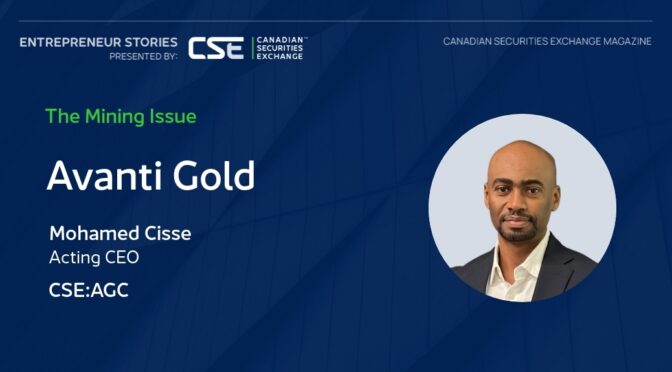
Drawing on years of experience with mining in the DRC, Avanti Gold (CSE:AGC; OTCQB:AVTGF) Acting Chief Executive Officer Mohamed Cisse understands the opportunity inherent in the country’s mineral wealth in a way few others can. Cisse played an important role in the development of Kibali, a combination open pit and underground mine in the DRC’s northeast that is often ranked as Africa’s largest gold producer.

“The DRC is a very interesting place, and I’ve had the opportunity to work there for many years,” Cisse explains. He says he sees “a lot of similarities” between Kibali in its early days and what Avanti Gold is working on at Misisi.

Misisi, also in the mineral-rich northeast, spans 133 square kilometres along a 55-kilometre gold belt called Kibara. The project area hosts an inferred resource of 3.1 million ounces of gold, with 41 million tonnes averaging 2.37 grams per tonne gold at the main Akyanga deposit. Few African deposits can match such grade, and beyond Akyanga there are five additional targets that remain largely unexplored but have returned promising preliminary results.

Misisi is owned 73.5% by Avanti and 21.5% by MMG, a Chinese exploration and mining company with projects in several jurisdictions around the world. The DRC government maintains a 5% carried interest.

“When I look at the deposit, the available targets, and the 55-kilometre strike at Misisi, the parallels with Kibali really stand out,” Cisse says. “There is strong consistency in the geology and in the drilling conducted to date, and several highly prospective targets that are ready to be drilled. That immediately caught my attention and made me feel this is something we can move forward.”

Kibali, operated by Barrick Gold, is among Africa’s largest gold mines. It has grown steadily since pouring its first gold in 2013, and drilling results from the ARK-KCD corridor show significant potential for additional orebodies within the existing footprint. Former Barrick Chief Executive Officer Mark Bristow noted at a media briefing in July 2025 that Kibali has consistently delivered across production, partnerships, and reserve growth.

Permitting and logistics also favour Misisi. The project is covered by three exploitation mining licences that span its entire extent and remain valid until 2045.

“This fully permitted 30-year mining lease gives us stability and long-term certainty,” Cisse says. “One of the biggest challenges mining companies face in Africa is securing a clear licence to operate. Having an exploitation licence in place provides the confidence and stability needed to move a project forward.”

The licence terms include a 3.5% royalty and 5% free carry for the government, as well as a fixed 30% tax rate. While the code has since been amended, Avanti expects its terms to remain the same as when the licence was granted in 2015.

Meanwhile, the broader market and policy environment is increasingly favourable for gold development. Minister of Mines Louis Watum Kabamba confirmed in September that the government is engaging mining companies on agreements to develop new gold mines, aiming to curb widespread smuggling. Rising gold prices provide additional incentive for investment. Talks include established operators such as Barrick, as well as prospective entrants such as Avanti. 

Security and stability remain important considerations for investors, and Cisse sees progress here, too. “There is risk everywhere in Africa, but the DRC has shown over the years, through operations like Kibali, Tenke Fungurume, and others, that investment can be worthwhile and can pay off,” he says.

The country held general elections in 2023, providing political certainty for five years. Another major catalyst is increased interest from the U.S. government, including efforts to support a peace agreement between the DRC and Rwanda, with mining investment playing a central role.

The U.S.-DRC Washington Accords, signed in late 2025, amplify this context. While focused on cobalt, copper, lithium, and manganese, the agreement reflects a broader push for U.S. strategic engagement in Congolese mining, countering China’s dominant position. Although gold is not a critical mineral, the political and investment momentum benefits projects like Misisi.

“We view the U.S.-backed peace initiative as a catalyst for greater stability, particularly around fiscal and regulatory frameworks,” Cisse explains.

Against this backdrop, Avanti Gold has moved decisively. A $25 million financing in October enabled the company to firm up its balance sheet and supports Phase One drilling. “We had some old liabilities to take care of, and that’s done. We now have around $20 million available to deploy,” Cisse says.

Avanti’s focus is now on the Phase One drilling program, which contemplates a total of 15,000 metres. That program will give the company clear visibility on resource expansion. Avanti’s team plans to use the capital carefully to finish the first phase, then revisit its models before taking any further steps. “The main goal is to expand the resource beyond the current 3 million ounces and explore the potential to reach 5 million ounces or more.”

Phase One targets Akyanga and Akyanga East. The original 3.1 million ounces were defined using a pit shell based on a gold price of US$1,500 per ounce. “We are redesigning the drilling program using a US$2,900 per ounce pit shell, which should allow us to expand the resource footprint and drill deeper,” Cisse says. Geologists will also conduct fieldwork across remaining targets, refining plans to maximize every metre drilled.

Phase Two will focus on redefining the resource and converting inferred resources into reserves, with a preliminary economic assessment (PEA) expected by 2027. “Our focus now is to execute the program effectively, share results with investors, de-risk the Misisi project, and increase the company’s net asset value quickly,” Cisse states. “This is about creating shareholder returns while developing the project for the long term, with the full support of our board.”

The company’s current market value underscores the opportunity. Trading at about $100 million, or roughly 60 cents per share, Cisse believes Misisi deserves a higher valuation. “By resuming exploration, we expect to better align with peers. Our goal is to bring Misisi to its full potential and show investors the value that’s already in the ground.”

The combination of high-grade resources, comprehensive permitting, political stability, and supportive geopolitics positions Misisi as a notable project. “This is the moment to maximize our efforts and advance the project in a region with significant upside,” Cisse says.

For investors and industry watchers, Avanti Gold offers a case study in strategic timing and execution. By leveraging lessons from Kibali, operating with clear licences and fiscal terms, and moving decisively in a favourable market, the company is attempting to replicate one of Africa’s biggest mining success stories while navigating a region often perceived as high in risk but rich with possibility.

“The potential with what we have currently happening in the DRC, with the backing from the U.S. government, is substantial, so we need to utilize that and then do a maximum amount of work to develop projects in that part of the world,” Cisse concludes. “This is the moment, and we have the opportunity to get the work done.”

This story was featured in Canadian Securities Exchange Magazine.

Learn more about Avanti Gold https://www.avantigoldcorp.com/.

Strategic Asset Combination Positions Rising Junior to Take Advantage of a Strong Metals Market

When Canadian Copper (CSE:CCI) first set its sights on New Brunswick’s Bathurst Mining Camp, the goal was to acquire prospective ground and move quickly to unlock the opportunity beneath the surface. Home to one of the world’s richest volcanogenic massive sulphide (VMS) districts and the legendary Brunswick No. 12 mine, the region also offers a combination of infrastructure, such as provincial highways, a year-round deep-water port, skilled labour, and regulatory stability.

The company’s mission took shape in what management calls its Combined Strategy, pairing the Murray Brook deposit – the province’s largest VMS resource – with the nearby, permitted Caribou Processing Plant Complex. By repurposing an underutilized mill to process feed from a world-class deposit, Canadian Copper aims to fast-track its operations from exploration to production within three years, subject to permitting approvals.

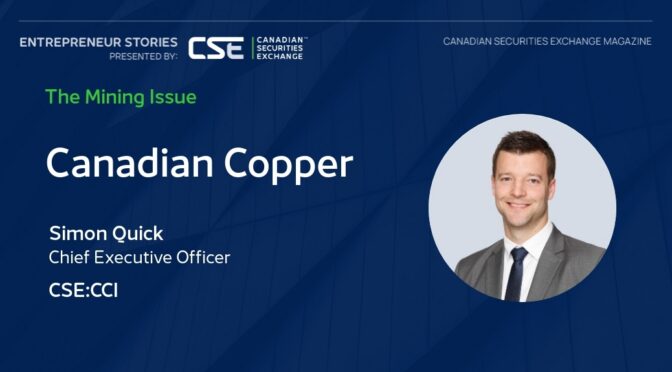
In this mid-January interview with Canadian Securities Exchange Magazine, Canadian Copper Chief Executive Officer Simon Quick speaks on themes ranging from global copper price trends to the company’s exploration priorities, and partnerships helping to turn its objectives into reality.

Canadian Copper has built a prospective land package in the Bathurst Mining Camp. What’s your big picture strategy for moving these assets forward over the next few years?

We chose the Bathurst Mining Camp because of its long history of critical mineral production. It was home to Brunswick No. 12, one of the largest underground base metal mines ever operated, producing copper, zinc, lead, and silver for nearly 50 years, something many people aren’t aware of.

That history brings real advantages. Jurisdictions with established mining legacies tend to have clear and robust regulatory frameworks; infrastructure such as ports, roads, and power; and a skilled workforce that knows how to permit, design, build, and operate mines. That made Bathurst an attractive location for us.

By focusing on a brownfield site with relatively low capital requirements, we’ve tried to reduce financing and permitting risks. Bringing in Ocean Partners gave us a strategic partner with the financial strength and technical expertise to execute our Combined Strategy. Ocean Partners are true partners, and I think every junior wishes they had this calibre of partner to develop an asset with.

Can you walk us through the Combined Strategy, which involves your Murray Brook deposit and the Caribou Processing Plant Complex?

The approach, both opportunities and challenges, of restarting brownfield sites isn’t unique in itself. What’s unique is this specific situation with Caribou. The site has operated intermittently for nearly 30 years, and the most recent operational challenge was mine throughput. The underground mine was deep and sometimes geotechnically challenging, suffered from dilution, and lacked underground drilling definition, so it could never consistently feed a mill sized for 3,000 tonnes per day. At its peak from 2017 to 2019, it averaged about 2,500 tonnes per day. Thus, the mill ran well but was always underutilized.

For us, the question was whether we can solve that throughput challenge and repurpose the mill. It’s permitted, built, and has a tailings impoundment. Roughly 10 kilometres away, we have the largest open-pit polymetallic resource, Murray Brook. By combining the two, you have complementary needs: a mill that needs throughput and a deposit that needs a mill. For us, it’s really a one-plus-one-equals-three transaction, and that’s the strategy behind the business.

As just noted, Murray Brook is New Brunswick’s largest VMS deposit. What are the key milestones in 2026 that will show the project is on track?

Murray Brook is a true VMS deposit, with copper, zinc, lead, and silver. With today’s commodity prices, the revenue mix shifts constantly. When we did our preliminary economic assessment (PEA), silver was US$27 an ounce; now it’s over US$90, so silver has become a much more significant contributor alongside copper and zinc.

Looking ahead, we plan to officially close the Caribou transaction this quarter, subject to certain government approvals. Final closing and title transfer involves a $6 million payment for the restructuring, which then goes to court in British Columbia, and ultimately the title should transfer here before the end of March based on New Brunswick’s current schedule communicated to us. After that, we’ll continue to advance engineering and permitting, with the goal of submitting the Environmental Impact Assessment in the first half of 2026.

By the end of the year, we aim to deliver a feasibility study that demonstrates engineering progress and develop necessary input data for permitting needs. This year, we hope to have the transaction closed, the permit submitted, engineering largely complete for the feasibility study, and the execution team staffed and ready for early works.

Can you walk us through the key exploration priorities for Canadian Copper this year, and how you plan to advance both the Murray Brook deposit and the surrounding regional targets?

There are three areas of exploration we’re focusing on for the combined company. First is the Murray Brook deposit itself. There are some extensions to the west that remain untested, with promising copper and gold intercepts. We have a 13-hole drill program planned to test that area this year.

Once we’ve consolidated the property package, as in close the Caribou transaction, we’ll control roughly 20 kilometres of the Caribou Fertile Horizon. That area has already delivered three producing operations, but we believe it’s still largely untested, especially using modern geophysics. We plan to conduct geophysical surveys across the region to help refine future exploration targets.

Finally, for Murray Brook West and Murray Brook East, we have follow-up drilling programs planned, including targeted exploration drill holes and larger-scale trenching to refine additional targets, guided by the results of our geophysical work.

You completed metallurgical drilling in 2025. Were there takeaways that shape how the project moves forward?

It’s still early days for the metallurgical test work, but one positive to note from the drill program is that our mineral resource model reconciled well. We re-drilled historical holes to target specific grades, lithologies, and resource depths, with the goal of confirming Caribou’s plant performance with the Murray Brook ore body. The drill program confirmed that our resource model tracks well in terms of what we anticipated to drill in terms of grade and depth, and the commodities matched what we encountered, which is encouraging.

With copper demand increasing and some commodity prices at record highs, Canadian Copper seems well positioned given your eye on production.

We’re targeting production within 36 months, which we believe positions us well in the current commodity environment.We’ll be one of the few junior miners able to reach production in 36 months, which positions us to take advantage of rising commodity prices. The supply side of copper is clearly under pressure: grades are declining, historic South American operations are getting deeper and more costly, and social acceptability remains challenging, certainly for new builds and expansions to existing operations.

At the same time, demand continues to grow. Traditionally, copper demand followed economic cycles, but with electrification, that dynamic is shifting. Industrial demand still fluctuates, but electricity-related consumption is steadily rising, creating an imbalance likely to support higher prices in the medium term.

Geopolitically, uncertainty around the U.S. dollar and global trade is driving investors toward hard assets like commodities, and being in North America is a big advantage.

For miners in Canada, this is the first administration in years that is genuinely pro-domestic mineral production, supporting investment, permitting, and critical mineral development. Combined with New Brunswick’s long mining history and excellent infrastructure, including a five-terminal port just 30 minutes from our site, we can export concentrates globally without the need for additional capital. That existing infrastructure is a major benefit for advancing our projects efficiently and cost-effectively.

You’ve brought in strategic investors and raised significant capital recently. How do these partnerships help advance your development plans?

We raised $15 million in Q4 of last year, mostly from strategic investors. By that, I mean groups with financial expertise in mineral resource development that understand the mining business, including partners like Crescat Capital, Stephens Investment Management, and Ocean Partners.

Looking ahead, we’re well funded for the acquisition, and we’ll be exploring additional financing to advance our development strategy. There are opportunities to do this on less dilutive terms through offtake agreements, streams, or royalties. We expect to make decisions on the structure in the first half of this year, depending on what makes the most sense for the project and our shareholders.

Finally, looking ahead, what does success look like for Canadian Copper both on the ground and for your shareholders?

On the ground, our key milestones are clear: deliver a study by the end of this year, obtain construction approval in 2027, and reach some level of production in 2028. Those are the three main measures of success for us as a business.

From a stakeholder perspective, if we continue to deliver on what we promise, minimize dilution, and ultimately increase the share price, that’s where investors’ interests should align. It’s aligned with management, too. We don’t take large salaries here; our personal investments are significant, and the way we succeed is the way our shareholders succeed. So, our focus is on share price appreciation but also on delivering what we say we can deliver.

This story was featured in Canadian Securities Exchange Magazine.

Learn more about Canadian Copper https://canadiancopper.com/.

A Large, High-Grade Precious Metals Project New to Public Markets Gets Ready to Shine

There are certain mining jurisdictions in the world that everyone in the industry knows and respects, and if Mexico doesn’t top the list, it’s certainly very close. Large, high-grade deposits and an environment that facilitates year-round exploration are just two aspects of the Mexico story that make it such an attractive country to operate in.

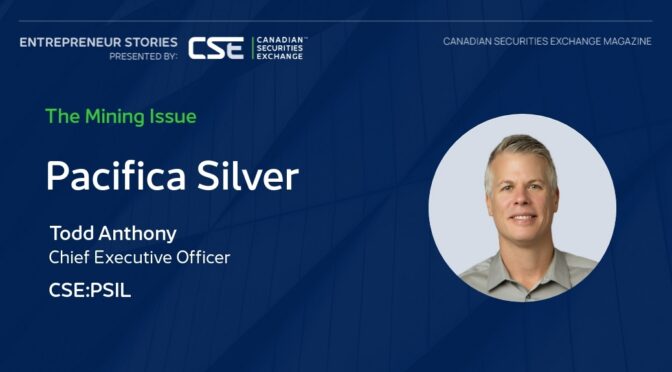
Pacifica Silver (CSE:PSIL; OTCQB:PAGFF) Chief Executive Officer Todd Anthony knows this as well as anyone, given a career with one of the world’s top mining companies that focused on Mexico. When it came time to set up and lead his own company, it was a natural choice.

Anthony joined Canadian Securities Exchange Magazine early in 2026 for a discussion covering Mexican mining, his uncompromising search to find the right project, and the company’s exploration plans for the year.

Pacifica Silver’s Claudia Project encompasses nine artisanal mines and over 30 kilometres of veins. Tell us why you chose to focus on Mexico, and how did the land package come together?

We acquired our project from a private company with multiple owners over the years. It was consolidated back in the early 1990s by one of the owners. There are some pieces of property that we are looking to add, but the majority were purchased from Durango Gold. That transaction closed in July of 2025.

As for why we chose Mexico, I spent a lot of time in the country during my 13 years with First Majestic Silver.  While the company had operations across the country, with varying degrees of risk, much of my time was spent in the state of Durango, which I consider to be one of the safest states to explore and operate in within Mexico. My professional network is also very familiar with Mexico, and so it just made sense.

We were looking for silver and gold projects, and if you are going to focus on silver, Mexico is the largest producing country in the world. You can drill year-round and drilling costs are very low compared to other parts of North America. In Nevada, you can be paying $400 or $500 per metre, and roughly the same for Idaho. In Mexico, we are about $105 per metre, and we don’t have to shut down for the winter, unlike some places in North America where you need to pull rigs off your site and close everything down.

Talk to us about previous exploration at Claudia and how that work shaped your plans.

Before we acquired this project, it had only had about 70 holes drilled into it since the 1990s, and a lot of those were into just one of the principal veins. We have mapped four major structures on the project, and a lot of the exploration we are doing now is to fill in some gaps and learn more about the potential.

As you mentioned, we have over 30 kilometres of veins that have been mapped, and about 90% of those 30 kilometres have never been drill-tested or sampled. We are doing a big sampling program now that will last all of this year and next year, plus mapping.

So, I would say that while we are early on in our exploration, this year will see the biggest drill program ever conducted on this project, as we are planning close to 40,000 metres. Half of that is going to be focused around the Aguilareña vein, which is the main past-producing vein from back in the 1990s. The other half will focus on brand new targets that have never been drilled, and with those it will be a more regional focus to find something big or to fail fast and keep moving around and looking.

Pacifica Silver just closed a $20 million financing. Can you discuss the makeup of the investor base in general terms.

We initially came out with a $10 million offering and demand for it was close to $28 million. The fact that we did not include a warrant and had that level of demand shows the amount of interest in what we are doing. It was great to see that the market was there for us.

We had a lot of support from shareholders who participated in our previous financing. We had three silver-focused corporates participate last time, and they all came in again on this round. Eric Sprott participated again and we also welcomed a few funds that were new to the Pacifica name. Overall, I’d say half of the $20 million was repeat buyers and half was new investors.

A large, high-grade project and two successful capital raises don’t come together without a capable team.  Tell us about your background and the strengths of your team.

We have a lot of good people with extensive experience in Mexico, including expertise in all of exploration, development, and production. We have 23 team members at site, including our Vice President of Exploration, Project Manager, field geologists, and administration. The team is very well equipped to operate in Mexico.

I started in the silver industry in 2010 when I joined First Majestic Silver. At that time, the company’s market capitalization was about $200 million, and I believe it has now topped $15 billion. I worked there for 13 years in the Vice President of Corporate Development role, reporting directly to the Chief Executive Officer. I also oversaw the investor relations function.

I stepped away from First Majestic in 2023 with a strong desire to build a company from the ground up and it took me approximately 18 months to find the right project. I reviewed over 70 different projects and there were always one or two insurmountable issues, whether related to grade, metallurgical recovery, or jurisdictional risk. I also didn’t want to put a recycled project into the company and wanted something the market had not seen before.

When I came across Claudia, there were no red flags and the project checked off every critical box: high-grade silver and gold mineralization exposed at surface, over 30 kilometres of mapped vein systems with only a small fraction drill-tested, existing drill permits, a capable local team already in place, location in the state of Durango, and mostly private ownership over the past 50 years. They just needed support with the capital markets, which matched my experience and network. It was a beautiful marriage of two companies and away we went.

As I said earlier, Durango is one of the best, if not the best, states in Mexico to operate in as an exploration or mining company. But don’t take my word for it: according to the Mexico Peace Index in 2025, Durango ranked in the top three out of 32 states, making it one of the country’s safest and most stable states. There is also a long history of exploration and mining in the state, and the Claudia Project is located in the heart of the Sierra Madre Occidental, where all these large deposits of silver and gold are found.

Within three weeks of closing our $10 million financing last September, we had the first rig on site and drilling, which illustrates that our team on the ground is nimble and can move fast.

You mention regenerative mining on your website.  What is that and why is it important to highlight?

The regenerative mining concept is sustainable mining. When mines shut down and go into reclamation, the economic driver behind them is often gone. But if we create processes and activities as we are building operations that will continue long after the mine is done, that is the regenerative side. Giving back to society and the environment is key. A lot of that is taking place, but I think there is more that can be done. The concept is still evolving and I highlight it as a priority for our team.

Do you have any closing thoughts on Pacifica’s strategy and long-term future?

Our core objective at Pacifica Silver is unequivocal: drive new high-grade discoveries and significantly increase our silver and gold resource base in ounces. We are built to thrive through market cycles – bullish or bearish – because sustainable value creation stems from a focus on high-grade projects, aggressive exploration, and resource growth in safe jurisdictions.

Mexico stands out as one of the few jurisdictions worldwide where high-grade epithermal silver and gold deposits can realistically advance from initial discovery to production in a compressed timeframe – typically five to nine years for standout projects, compared to averages of 27 years in Canada and nearly 29 years in the United States.

This efficiency, combined with Mexico’s skilled workforce, established mining infrastructure, and exceptional mineral endowment in the Sierra Madre Occidental, makes the country our unequivocal focus at Pacifica Silver. 

On the Claudia Project, our strategy is clear and aggressive: drill extensively across numerous high-priority targets over the next 18 to 24 months to either delineate a major discovery or pivot decisively. We are positioned to seize the moment and build something extraordinary.

This story was featured in Canadian Securities Exchange Magazine.

Learn more about Pacifica Silver https://www.pacificasilver.com/.

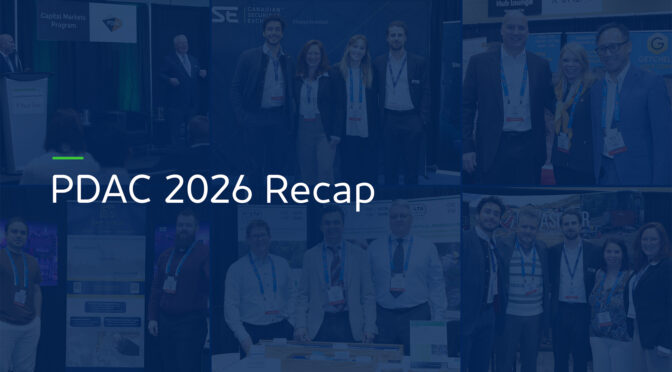
PDAC 2026 Recap

The first quarter’s mining conference circuit is officially over, and we’re reflecting on another legendary PDAC season. 

We returned as a sponsor and exhibitor to this premier mineral exploration and mining convention, organized by the Prospectors and Developers Association of Canada, and were once again impressed by the strong event attendance and enthusiasm of mining executives and investors on trends and developments in the industry.

Beyond the convention programming, there was no shortage of adjacent events keeping us busy and connecting us with our peers in the space. Not only did we attend external events, including Red Cloud Financial Services’ Pre-PDAC Mining Showcase, but we hosted two luncheons – PDAC Global Markets Luncheon and The CSE’s Annual PDAC Investor Luncheon – as well as bringing back our fan-favourite networking event, On the Rocks.

Keep reading for a full overview of our PDAC season recap, and be sure to visit our events calendar to see where we’re headed next.


Red Cloud Pre-PDAC Mining Showcase

On our road to this year’s PDAC, we had a fantastic time returning to Red Cloud Financial Services’ Pre-PDAC Mining Showcase as a sponsor. 

Taking place at the historic “King Eddy” in Toronto, this showcase was a great way to kick off PDAC season, with plenty of keynotes, presentations, and networking to set the pace for the Convention. 

As always, we also enjoyed catching up with our peers in the mining and investment communities, as well as CSE listed issuers at the event, including: 

Thank you to Red Cloud Financial Services and PearTree for hosting and having us!

View Highlights: Red Cloud Pre-PDAC 2026 Mining Showcase


PDAC 2026

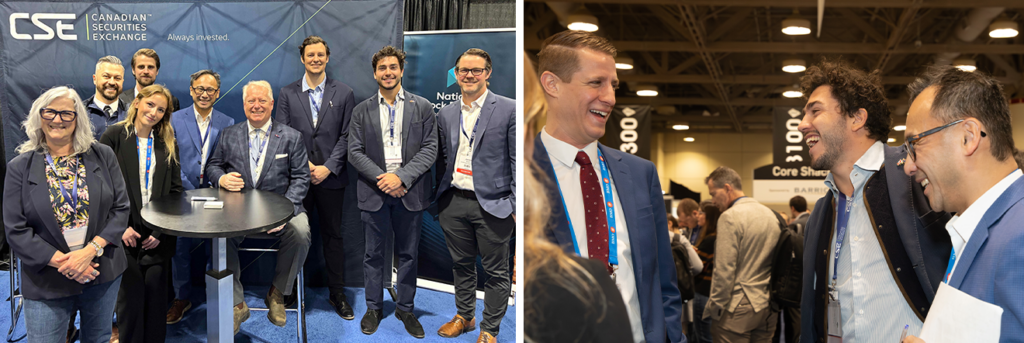
As always, we were proud to sponsor and attend the legendary PDAC Convention and to connect with investors, industry leaders, and government representatives from around the world over mineral exploration and mining.

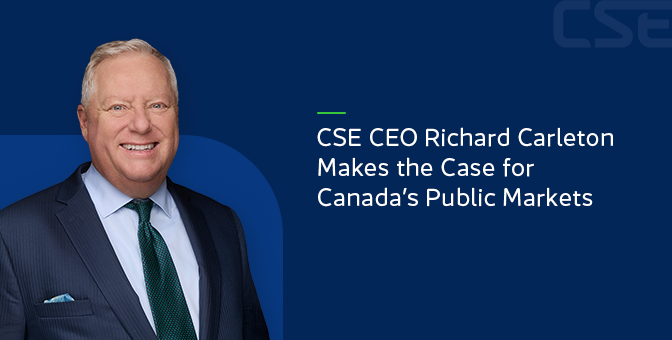
Thank you to everyone who stopped by our booth, attended CSE CEO Richard Carleton’s session, “Mines, markets and money: An overview of Canada’s marketplace,” and joined us at our CSE-hosted events.

Beyond our participation, it was also great to see the Exchange well represented by the 30+ CSE listed issuers that exhibited during the convention, including:

We’re grateful to the Prospectors and Developers Association of Canada for putting on another excellent show. Until next year!

View the Album: PDAC 2026


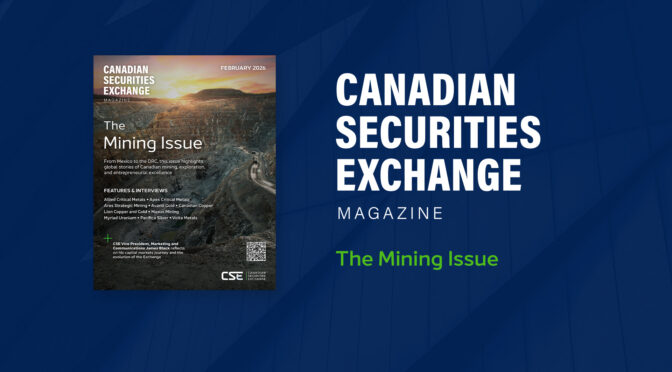
Canadian Securities Exchange Magazine: The Mining Issue

Of course, it wouldn’t be a PDAC tradition without bringing physical copies of our always-popular Mining Issue of Canadian Securities Exchange Magazine, which was available at the various media and magazine racks throughout the convention, the CSE booth, and our CSE-hosted events.

This special final edition spotlights 10 CSE listed companies, highlighting global stories of Canadian mining, exploration, and entrepreneurial excellence, from Mexico to the DRC. 

Plus, CSE Vice President, Marketing and Communications James Black reflects on his capital markets journey and the evolution of the Exchange.

Featuring Allied Critical Metals (CSE:ACM), Apex Critical Metals (CSE:APXC), Ares Strategic Mining (CSE:ARS), Avanti Gold (CSE:AGC), Canadian Copper (CSE:CCI), Lion Copper and Gold (CSE:LEO), Maxus Mining (CSE:MAXM), Myriad Uranium (CSE:M), Pacifica Silver (CSE:PSIL), and Volta Metals (CSE:VLTA). 

Missed grabbing a copy? Check out the digital version. And be sure to stay up to date on company news, issuer stories, and capital markets insights by subscribing to our email newsletter.

Read More: Canadian Securities Exchange Magazine: The Mining Issue


PDAC Global Markets Luncheon

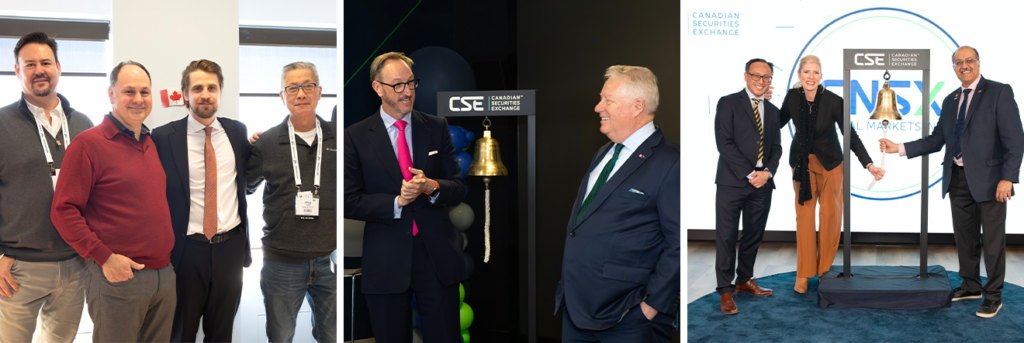
In addition to the regular PDAC programming, we co-hosted The CSE’s PDAC Global Markets Luncheon with the National Stock Exchange of Australia (NSX), and the event was a big hit!

Taking place at CSE headquarters in Toronto, this event served as a platform to discuss the continued collaboration between Canadian and Australian markets and to network with peers over lunch.

CSE CEO Richard Carleton and Director of Listings Development Anna Serin were joined by NSX CEO Max Cunningham to provide insights into key developments and opportunities. 

Thank you to the NSX for co-hosting and everyone who joined us!

View Highlights: PDAC Global Markets Luncheon


The CSE’s Annual PDAC Investor Luncheon

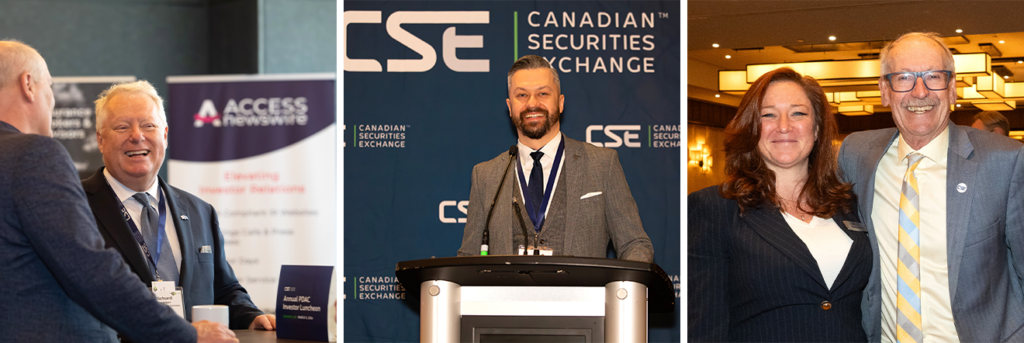
Our highly anticipated Annual PDAC Investor Luncheon also returned on March 3 at the Delta Hotel Toronto.

It was an engaging afternoon devoted to mineral exploration, with investors, industry experts, and capital markets participants converging to network and enjoy pitch presentations from CSE listed companies over a delicious lunch.

A special thank you to our event sponsors, MNP, Paul Benwell & Associates, Venture Liquidity Providers, Independent Trading Group, Corporate Counsel, Endeavor Trust, Vested, Grove Corporate Services, Lawson Lundell LLP, Purves Redmond Limited, DSA Corporate Services, Marrelli Support Services, Access Newswire, Marrelli Trust Company, and Richmond Investor Relations Services.

Kudos to all of our CSE listed presenting companies:

And to everyone who joined us, thank you!

View the Album: CSE’s Annual PDAC Investor Luncheon


On the Rocks

Last but certainly not least, our annual PDAC networking event, On the Rocks, presented in partnership with MNP and Aird & Berlis LLP, was a rockin’ good time!

It was great to be back at Toronto’s iconic Steam Whistle Brewing to catch up with friends old and new in the mining and capital markets spaces over delicious food and drinks.

Thank you to everyone who joined us!

View Highlights: On the Rocks

Brownfield Copper Project in Nevada Progressing Quickly to Realize Production by 2029

Lion Copper and Gold (CSE:LEO; OTCQB:LCGMF) is right where a junior mining company wants to be in the metals market of early 2026, with its brownfield Yerington Copper Project, situated in the famously mining-friendly jurisdiction of Nevada, set for both further exploration and a push for production before the decade is out.

Adding to the company’s strengths is that Yerington aligns well with the growing U.S. demand for domestically supplied critical minerals.

While all of this held true before, it does even more so now that Lion Copper and Gold has secured an agreement with Rio Tinto’s Nuton venture, which in November 2025 committed up to US$31 million to advance the project. Nuton will also make cutting-edge bioleach technology available to support production.

Lion Copper and Gold Chief Executive Officer John Banning explained to Canadian Securities Exchange Magazine that Nuton’s decision followed a year of significant technical and regulatory progress at Yerington.

“We had a huge year last year,” Banning says. “We completed our pre-feasibility study (PFS), demonstrating economic viability to the appropriate public and technical reporting standards in North America, and we regained our critical water rights for the project.”

Unlike the more traditional staged approach to feasibility and permitting, Banning explains that Nuton has sufficient confidence in Yerington to advance both simultaneously.

“We aren’t doing what some companies do, which is a staggered definitive feasibility study (DFS) and then permitting,” he notes. “Nuton has the confidence in the project to do them in parallel. Their US$31 million commitment is an endorsement for the project to move toward construction-ready status as quickly as possible.”

The funding structure is designed to carry the project through to full permitting. Crucially, Nuton’s option structure avoids dilution at the parent company level during what Banning describes as the highest-risk stage of development.

“Typically, the DFS and permitting stage carries the highest risk,” he says. “Our shareholders are not going to pay for any of that. It’s an asymmetrical risk-upside position for investors and shareholders.”

At a base-case copper price of US$4.30 per pound, the PFS outlines a post-tax net present value (NPV) at a 7% discount rate of US$694 million, with an internal rate of return (IRR) of 14.6% and a payback period of 6.7 years.

Yerington is modelled to achieve average annual production of approximately 120 million pounds of refined copper cathode over a 12-year mine life, with peak production of 151 million pounds per year during years five through seven.

Proven and probable reserves total 506.5 million tons grading 0.21% copper, which works out to 2.14 billion pounds of copper.

In addition to reserves, Yerington hosts a measured and indicated resource of 293.3 million tons grading 0.18% copper, containing 989 million pounds of copper, as well as an inferred resource of 158.1 million tons grading 0.14% copper, containing 443.4 million pounds of copper. 

Metallurgical testing highlighted strong copper recoveries using low-cost heap leaching. Life-of-mine copper recovery averages 67.4%, including recoveries of 73.2% from sulfide material using Nuton’s leach technology and approximately 60% from oxide material processed through conventional heap leaching.

Beyond favourable economics, Yerington benefits from its location in Nevada, a jurisdiction Banning characterizes as predictable and well-versed in the ins and outs of the mining industry.

“We’re in Nevada, an extremely mining-friendly and stable jurisdiction with very clear, well-understood permitting pathways,” Banning says. “That’s always a key perception of risk to manage with investors and stakeholders.”

Yerington also sits within a broader copper district that Banning believes is often overlooked. “A lot of people don’t realize the massive copper porphyries in this district. There are more than 30 billion pounds of copper resources within a seven mile radius of our project. We hold the strategic ground right in the middle with existing infrastructure.”

The project’s brownfield nature further reduces execution risk. “There are two open pits. One was mined in the 1990s, one was mined in the 1960s and 1970s, and we simply want to restart those mines,” Banning explains.

The company’s partnership with Nuton represents a core element of Lion Copper and Gold’s development strategy, bringing Rio Tinto-backed sulfide leaching technology into play. Banning describes the technology with a single word: “incredible.”

Nuton’s bioleaching process offers potential economic and environmental advantages over conventional copper processing, including a lower carbon footprint and reduced water consumption.

The process eliminates the requirement for a tailings storage facility and avoids the capital intensity associated with building and operating a mill. It also expands the range of copper resources that can be economically evaluated, particularly lower-grade sulfide material, which represents a significant portion of Yerington’s mineralization.

“For decades, copper has been processed through conventional milling and concentrating with large tailings storage facilities,” Banning says. “What Nuton brings is bioleaching technology that removes the need for all of that.”

From an environmental, social, and governance (ESG) perspective, Banning notes that Nuton’s process materially reduces resource intensity. “They do it with a much lower carbon footprint and significantly lower water consumption, less than half of conventional methods.”

Water security has already been addressed as part of the project’s de-risking strategy. In 2025, Lion Copper and Gold regained more than 6,000 acre-feet of critical water rights for the project, providing operational certainty.

With funding in place, Lion Copper and Gold is preparing to shift into a more execution-focused phase in 2026. “Shortly, we’re going to be confirming the monies coming in,” Banning says. “With that comes appointing our feasibility study and permitting consultancy partners.”

The company also plans to advance permitting under the U.S. federal FAST-41 program. “That’s going to give the public a very clear and transparent, milestone-driven timeline for certainty.”

Banning frames Yerington’s development timeline against longer-term copper fundamentals rather than near-term price volatility. “Fundamentally, copper is very cyclical,” he says, adding that recent price strength reflects short-term dynamics.

However, he sees strong alignment between Yerington’s timeline and future demand. “From 2030 to 2040, structurally, the market gap is forecast to be widening significantly,” he says, citing demand from AI data centres and their supporting grid infrastructure. 

Lion Copper and Gold plans to produce finished copper cathode for the U.S. market. “Our project will produce a final product of LME-grade copper cathode,” Banning says. “That cathode will go directly into U.S. supply chains.”

Production at Yerington is targeted for the end of the decade, with initial output planned for the second half of 2029. “Those billions and billions of dollars of investments in AI infrastructure are being committed now and will manifest in the next several years, right when we plan on beginning our production. Ideal timing,” Banning says.

As the company advances, Banning highlights execution over promotion. “We’re not about headline grabbing. We’re about creating value by delivering milestones and doing what we say.”

This story was featured in Canadian Securities Exchange Magazine.

Learn more about Lion Copper and Gold https://lioncg.com/.

Faith in High-Grade Tungsten Project Pays off as Metal Price Soars, Governments Take Notice

It may have escaped the attention of investors focused on gold and silver over the past year, but tungsten has become one of the most in-demand metals in global commodity markets.

The driver is defence. Tungsten’s combination of extreme density, hardness, and a very high melting point makes it essential for weapons, armour, and shielding, as well as for aerospace and other high-end applications.

Prices doubled in 2025 as defence demand accelerated and China announced new export controls. Tungsten ammonium paratungstate (APT) prices averaged around US$375 per metric ton unit (MTU) in 2024, rose above US$400 per MTU by May 2025 and climbed to more than US$1,000 per MTU by the end of the year.

Western supply is scarce. The U.S. and Europe remain heavily dependent on imports from geopolitical rivals, with China, Russia, and North Korea controlling more than 85% of global supply. As defence spending rises, the case for near-shored production is hardening – and long-dormant assets are being reassessed.

One such asset belongs to Allied Critical Metals (CSE:ACM; OTCQB:ACMIF), its flagship Borralha tungsten mine in northern Portugal. Borralha was shuttered in the mid-1980s when a surge in Chinese production drove prices well below US$100 per MTU, rendering many Western operations uneconomic.

With Europe’s rearmament drive still in its early stages, and NATO members committing to higher long-term defence spending, the European Union has identified tungsten as a critical raw material under its Critical Raw Materials Act, underscoring the strategic importance of domestic supply.

Against that backdrop, it is little surprise that efforts to restart operations at Borralha are moving at pace.

In October, idD Portugal Defence, a company under the supervision of the Ministry of National Defence and the Ministry of Finance that works to enhance Portugal’s defence technological and industrial base, endorsed the Borralha project via a formal letter of recognition as a “strategic initiative of national importance, with direct impact on Portugal’s and Europe’s defence supply chains.” 

That support has translated into regulatory momentum. In January, Portugal’s environmental agency issued a favourable Environmental Impact Declaration for Borralha, clearing the way for the project to advance into detailed engineering and the next phase of permitting. 

“These are indicative of the Portuguese government’s support of the project and underscore its strategic importance to Portugal,” says Allied Critical Metals Chief Executive Officer Roy Bonnell. “We’re working with the government right now to put in place the type of support that will help make this project a reality.”

The backing is consistent with a broader shift in Portugal’s approach to strategic minerals. This past month, for example, saw London-listed Savannah Resources  confirm receipt of a €110 million (C$178 million) grant from the Portuguese government. 

Restarting Borralha, which was one of Portugal’s most significant tungsten producers for around 80 years until it was shuttered in 1985, reflects changing economics. Its closure four decades ago was driven by low market prices at the time rather than any deterioration in the underlying geology, says Bonnell.

“The grades were always good. If you look around, there were a lot of tungsten mines that probably shut down,” he explains. “The grades at Borralha are fantastic, but they shut it down because of the prices.”

In September 2025, Allied reported results from a reverse circulation drill program targeting an ultra-high-grade zone within the Santa Helena Breccia. Highlights included an intercept of 12 metres of 4.27% tungsten (WO3), including 6 metres of 8.39%, a combination Allied highlights as one of the highest-grade tungsten intercepts reported in Western exploration.

Additional intercepts confirmed mineralization extending both down dip and along strike, supporting the view that higher-grade zones widen at depth rather than pinching out.

Recent drilling at Borralha has focused on extending known mineralization and testing higher-grade zones within the broader system. Bonnell says the results point to a large, continuous tungsten deposit with internal higher-grade shoots – a characteristic shared by several long-life tungsten operations globally.

A 20,000-metre drilling campaign is now underway, designed to further define these zones, convert inferred material into higher-confidence categories, and underpin upcoming economic studies. Current funding on the balance sheet is designed to get Allied through to the definitive feasibility study (DFS) stage.

In November, Allied upgraded Borralha’s mineral resource estimate, lifting measured and indicated resources to 13 million tonnes grading 0.21% WO₃, with a further 7.7 million tonnes at 0.18% WO₃ classified as inferred, all within the Santa Helena Breccia.

For readers less familiar with this corner of the commodities market, WO₃ contains about 79.3% elemental tungsten by weight, meaning a grade of 0.21% WO₃ equates to roughly 0.17% tungsten metal.

While headline grades may appear modest to non-mining investors, tungsten deposits are typically bulk-tonnage systems. In that context, Borralha compares favourably with other undeveloped Western projects, particularly when paired with its brownfield status, existing infrastructure, and proximity to European end markets.

As a brownfield project, converting those tonnes into cash flow becomes a lot easier. It has existing access, power, and a long history of underground mining, which lowers capital intensity, shortens development timelines, and should help potential off-take deals, says Bonnell.

In the current tungsten market, the economics look very different to those that prevailed when the mine was last operating. 

Bonnell argues Borralha is unlikely to sit at the high end of the cost curve. “This is not a high-cost tungsten project by any means,” he says. “We’re going to be probably one of the least expensive ones in the Western world.”

When Allied began assembling the project in 2023, tungsten prices were closer to US$300 per metric ton unit. “It made sense to us even then,” Bonnell adds. “At current levels and around US$1,000 a tonne, it becomes tremendously exciting.”

Cost positioning matters in a market with a history of price volatility. Lower-cost operations are better placed to weather cyclical downturns, while retaining significant upside in a tighter supply environment.

The next milestone is a preliminary economic assessment (PEA), expected this quarter. 

Bonnell says the company is funded through the current phase of 20 kilometres of drilling through the end of this year.

Beyond that, Allied is exploring a mix of funding options for construction. “We’re continuing to work with governments, not just the Portuguese government, but probably talking to the EU, to NATO, to Canada, to the U.S., and other governments, to make sure that we can get at least a base of financing that is as non-dilutive as possible to our shareholders,” Bonnell says.

“From there, we’ll be looking to move toward a larger financing for our plants, so we can move to construction as soon as possible.”

Allied is also looking to firm up off-take agreements with smelters, which would provide an early test of demand and add commercial validation to the project.

To that end, the company established a U.S. subsidiary last year to focus on the North American market, led by retired U.S. Army Major General James “Spider” Marks and Kirstjen Nielsen, who served as U.S. Secretary of Homeland Security during President Donald Trump’s first term.

“The U.S. is the biggest market in the world for tungsten, but there’s no domestic production,” says Bonnell. “It’s been more than a decade since there was any meaningful output. That creates an opportunity, because they have to buy from abroad.”

Four decades ago, Borralha was a casualty of low prices and global oversupply. 

Today, as the U.S. and Europe rethink how to source critical materials, the mine’s revival reflects a broader shift in how strategic metals are valued – and who is expected to produce them.

This story was featured in Canadian Securities Exchange Magazine.

Learn more about Allied Critical Metals https://alliedcritical.com/.

Canadian Securities Exchange Magazine: The Mining Issue – Now Live!

Welcome to the latest issue of Canadian Securities Exchange Magazine, your source for in-depth stories of entrepreneurs from a wealth of different industries.

Over the past twelve months, the global economic landscape has shifted. Gold surpassed US$5,000 per ounce, and the conversation around critical minerals has moved decisively from economic opportunity to strategic necessity. The momentum in mining and mineral exploration is indicative of their importance to the Canadian public markets in general and to the CSE in particular.

As the final edition of our magazine, this issue also marks a shift in how the CSE provides a platform for entrepreneurs’ stories. Though the format may change, our commitment to amplify issuer stories to the world does not. The CSE remains always invested in the companies and the people shaping what comes next.

In this special final issue of Canadian Securities Exchange Magazine, we feature 10 CSE listed companies, spotlighting global stories of Canadian mining, exploration, and entrepreneurial excellence.

The CSE listed companies featured in this issue include:

Check out the Mining Issue of Canadian Securities Exchange Magazine here:

Meet National Stock Exchange of Australia Managing Director and CEO Max Cunningham

Tell us a bit about yourself. What was your journey to the NSXA?

I’ve been in capital markets for over 30 years. I was a foundation employee when Macquarie Equities opened a retail broking business in Australia in 1994 and was sent to London with Macquarie in 1997 to help build out the U.K. institutional business. 

In 2004, I moved to New York to perform a similar role with Goldman Sachs, before returning to Australia to head up Goldman’s capital markets business in 2008. I shifted to ASX and the exchange world in 2013, where we built a strong franchise around tech listings, including achieving great success in the U.S., Israel, and Ireland. 

Exchanges play an important role in helping companies raise capital, and I believe that role had been increasingly neglected in Australia. The National Stock Exchange of Australia (NSXA) was attractive to me as an underutilized public market with a valuable listings licence. I saw a great opportunity to rebuild the NSXA as a competitor in the venture and start-up space, very similar to CSE’s successful execution in Canada.

For those of us who are unfamiliar with the NSXA, can you please provide a bit of background on the exchange, as well as some context around the current challenges and opportunities for public companies in the Australian capital markets?

The National Stock Exchange of Australia has been around in various guises for over a century. Part of its history includes the Bendigo Stock Exchange, formed in the 1860s to fund the Victorian gold rush. This century, NSXA has led many innovations, including tokenizing wine units in 2002, trading taxi plates in 2006, and, more recently, operating a market for agricultural cooperatives to trade shares.

As CEO, what is your vision for NSXA over the next few years? For this partnership?

Our goal is simply to innovate and compete. On the innovation front, we intend to invest in cutting-edge technology to improve trading capability, provide additional services, and expand our listings offering. Competition is something you create as an exchange, and the reality is that small miners, pre-revenue tech, and life sciences companies are increasingly finding it difficult to IPO in Australia, and we can assist with that. The same applies to junior explorers listed in Canada.

Our partnership with CSE will assist on all fronts. It offers experience and expertise in a similar market, provides technology and marketing support, and a great existing network of issuers to call upon. Moreover, Australians and Canadians are natural allies. The NSXA and CSE teams have clicked together very well. That’s obviously great for our staff, but it’s also beneficial for our customers and other stakeholders.

The collaboration opens the door for, among other things, dual listings. What are the benefits for retail investors and public companies in both Australia and Canada?

In reality, we have similar markets and economies, with large pension plans and individual investors looking at opportunities, especially in the mining sector. In my view, Canada and Australia have slightly different investment, risk, and interest rates cycles, with Canada slightly skewed toward the U.S. and Australia toward Asia. This often presents “valuation arbitrage” that companies can potentially benefit from by being listed in both markets. The prospect is exciting.

Looking ahead, how do you expect Australia’s capital markets landscape will evolve, especially as it relates to international opportunities?

Australian pension pools are growing exponentially, and there is a big drive to invest in local tech and keep those businesses local, especially their intellectual property. This combination should see more international opportunities to dual list so as to take advantage of that combo. Indeed, the Australian government has committed AUD$1 trillion of investment in the U.S. over the next decade. There’s no reason why a large part of that can’t be realized through dual listing opportunities. As I look ahead, I see a dynamic and healthy future.

A Unique Approach to Ultra-Pure Production Could Spur the Wider Adoption Needed for Graphene to Truly Take Off

Investors are constantly on the hunt for disruptive products that completely change an industry’s dynamics. Disrupting the approach to manufacturing a game-changing product thus seems like taking things to an even higher level.

That is what HydroGraph Clean Power (CSE:HG; OTCQB:HGRAF) has been working on since 2017, when the company was formed to pursue the production of graphene in a way that resulted in higher purity, was more cost-effective, and more environmentally friendly than conventional methods.

Fast-forward to 2025 and HydroGraph has reached its objective, with a readily scalable process that yields high-quality graphene while adhering to the founding team’s tenets.

Graphene is perhaps best described as a super-material. Many times stronger than steel, it is also a highly efficient conductor of electricity and heat, impermeable, and very flexible, among other qualities. The process of incorporating it into products can require specialized knowledge, but it still has found a home in a long list of items, with composites, electronics, and biomedical products among the categories tipped to lead future applications.

HydroGraph’s core technology is its patented detonation synthesis process, which is quite a departure from methods that begin with graphite from the ground. Instead, HydroGraph detonates hydrocarbon gases using acetylene and oxygen to generate synthetic graphene by turning the gas into a powder.

One aspect of the process that makes it unique, according to the company, is its simplicity. Conducting the detonation process with high-purity feedstock yields graphene with a purity level on the order of 99.8%. Consistency is another competitive advantage for HydroGraph, as the company has been able to produce a virtually identical product each time it has scaled up output.

And changing the details on the input side can produce different graphene types to meet the particular needs of a given customer.

Technologies like these need protection, and in this regard HydroGraph holds three patents at present, with another eight pending.

“A number of companies have tried to go around our patents and everything has been rejected by the U.S. Patent Office, so we feel strongly about our position in the market,” says HydroGraph Clean Power Chief Executive Officer Kjirstin Breure.

Breure, who joined the company as its Chief Operating Officer in 2020 before becoming CEO in 2024, holds an MSc in Materials Science and Engineering from Arizona State University and has spent over a decade involved with emerging technologies in the commercial sector, including machine learning, data analytics, and blockchain.

Commercialization of HydroGraph’s graphene is already underway, with more than 60 entities in various stages of testing it for potential inclusion in a wide range of products and industries.

One of those, Hawkeye Biomedical, is using HydroGraph’s graphene in its Lung Enzyme Activity Profile (LEAP) lung cancer biosensors. And in late September, HydroGraph announced a letter of intent with SEADAR Technologies, a developer of subsea sensing and surveillance solutions, to integrate HydroGraph’s graphene materials and coating technologies into current and future SEADAR undersea products.

Breure notes that the average development cycle for its customers is about 18 months. First is lab-scale testing, which leads to industrial trials where a potential customer experiments with HydroGraph’s materials. Assuming everything goes well, contract negotiation is the next step.

An important venue for interacting with potential clients in the graphene industry is the Graphene Engineering Innovation Centre (GEIC) at the University of Manchester. HydroGraph has its own laboratory at the GEIC, which has established itself as a hub for companies looking to integrate graphene into their products. With deep expertise on site and all the right equipment, the GEIC is the perfect location for graphene suppliers and users to explore real business relationships.

Current production capacity is 10 tons per year and new production units, in the form of the company’s patented Hyperion detonation chamber, can be built and brought onstream in as little as two to three months.

HydroGraph’s first commercial unit, a 13,000 square foot facility located in Manhattan, Kansas, started production in 2022. The company’s second production facility will be established in Texas, in part because that state is one of the best places to source the acetylene used in the detonation process.

Scaling up on the revenue generation front could feed quickly to the bottom line, as HydroGraph estimates that an outlay of US$10 million to US$15 million on production can generate more than $100 million in sales.

With the ability to quickly increase production capacity and a healthy pipeline of potential customers, it is reasonable to expect new developments coming to light before long.

“We will be announcing the gas partner that we are working with for a large-scale production facility where we have negotiated pipeline access for acetylene, and we are looking forward to announcing a relationship with the U.S. military,” Breure says.

Breure adds that HydroGraph is planning to provide an update on the status of its submission to the U.S. Environmental Protection Agency and that contract announcements emerging from the company’s commercial pipeline are likely.

“We have between 10 and 15 clients that are really in that last stage that could convert into revenue within the next year,” Breure says, adding that the company has generated “small amounts” of revenue thus far but expects a more significant revenue stream to be “kicking in next year.”

This story was featured in Canadian Securities Exchange Magazine.

Learn more about HydroGraph Clean Power https://hydrograph.com/.

A Mathematical Approach to Location Assessment Finds Applications Across a Wide Spectrum

They were a novelty not that many years ago, but today drones are growing quickly in popularity and importance, used for everything from documentary filmmaking to surveillance and payload delivery on modern battlefields.

For military applications, undermining the effectiveness of a drone by denying it use of critical data and control inputs is something all major armed forces are likely working on. As such, the more independent one can make a drone, the greater its chance to be effective today and in the environments of the future.

Sparc AI (CSE:SPAI; OTCQB:SPAIF) has developed a solution that enables drones to assess object location without the use of GPS, radar, or other inputs that most such devices currently rely on. Its technology is ready to commercialize, and other innovations for drone operator control platforms are just around the corner.

Canadian Securities Exchange Magazine spoke recently with Sparc Al Chief Executive Officer Anoosh Manzoori about the technology’s capabilities, practical applications, and the status of commercialization efforts. 

Sparc AI’s technology uses sophisticated algorithms to measure the location and distance to any object on land or water, with military drones being an important application. How would you define the company’s current objectives?

Our core mission is built around technologies that allow products to work out in the field without GPS.

Interruption to GPS is a real challenge for both defence and commercial applications. There are something like 34 GPS satellites, and you need four of them to record just one location. The receiver connections to these satellites can be compromised, leading to a GPS-denied environment.

Looking at an object that is 5 kilometres away, for example, and determining its geocoordinates and distance without GPS, or any other sensor, is the crux of what we are trying to solve.

That would be our target-acquisition system, and we have another product that is coming that adds intelligence to that platform. It is all operating in a covert environment without GPS.

With drones, weight is an issue, as an operator often wants them to fly long distances or loiter for extended periods. What equipment does Sparc AI attach to drones to facilitate your solution?

Our solution is completely software-based; the telemetry data that is already with the drone is what we use. We need to know the height of the drone. And all drones have a barometer so they can measure air pressure as they move up in the sky. We need to know the angle of the camera pitch in terms of its line of sight. We also need to know the heading or the compass of where the drone is pointing.

What we are doing is mathematically creating a representation of the device in the air relative to the terrain and where it sits. It becomes spatially aware of where it is and where it is pointing, and we can then do a representation of where it is looking and calculate the distance and geolocation.

We don’t use any sensors. We don’t use lasers, lidar, radar, or image recognition software. Although we use the camera, it is already on the drone for the benefit of the operator to see what they are looking at.

We are installed on a Parrot ANAFI drone, a military drone. It is a 500-gram drone, so if we were to put more equipment on it, you would not be able to fly the device.

Because we are software-based and covert, there is no signature emitting from the drone, and nobody knows we are doing any targeting. We save on payloads, weight, and battery.

What is the maximum distance Sparc AI’s technology can measure?

Range really comes down to the ability for the operator to see the target. On the ANAFI drone, for example, the camera enables us to zoom in on a target. We have not seen any limitations on the range and have tested as far as 50 kilometres. We are limited based on how much we can see.

With alternative technologies that might be using a laser system, radar, or lidar, the farther away the object becomes, the less accurate it generally is. Think of a laser beam that becomes more like a cone as it goes farther from its source. These technologies are also detectable and not covert.

Mathematically, there are no limitations in terms of how far the technology would work. It also works on both land and water.

What is the competitive landscape in this market? Technology with military applications is in intense development around the world.

In the military sense, there is a category of products called the target-acquisition system. They typically weigh about 20 kilograms to 25 kilograms and fit a soldier’s backpack. They require a bit of setting up, have to be installed on a tripod, and come with a cable about 25 metres long that connects to a tablet.

The solider needs to install it, position the device, then go and hide somewhere with the tablet to control the system. The reason they need to do that is because the system has a laser – and sometimes radar – on it, so it emits a signature. Basically, when you are looking at your adversary, you then become detectable, and they can start to look back at you. You start to put yourself at risk the moment you set this up.

The system is also quite expensive and requires a lot of energy, so soldiers typically carry extra battery packs.

The alternative is to put the equipment onto a drone. That means the drone is big, quite expensive, and will send a signature back to the enemy.

The way Sparc AI works, because it is completely software-based, it can be used on any device. The Parrot ANAFI is a drone very much used on the edge of the battlefield, and with Sparc AI you could do your target-acquisition rapidly, without any detection.

The software is installed on the controller, so we are not using any resources of the drone. We have also developed an extension where we are able to navigate the drone autonomously using purely the target-acquisition system to record the location and coordinates for navigation.

Are there other markets in addition to military applications?

Another market is search and rescue, where you identify the location of assets or people during emergencies. The technology was sold to one of the largest telecommunications companies, and it was installed on fixed cameras rather than drones. Think of an old pipeline that requires maintenance that is located in GPS-denied environments.

Sparc AI’s technology is very specialized. Can you discuss your team with us?

We have two people who are ex-military personnel, one of whom had leading roles in special forces here in Australia. So, both have experience in the defence sector that not only commercially helps open doors but also enables us to better tailor our product for the defence market.

We also have two directors who are very experienced in commerce and finance and dealing with technology companies.

As for myself, I built one of the largest cloud hosting companies in Australia before exiting and have been an active investor for the past 25 years. I’m quite technical and have made significant contributions to our technology and source code.

Where are you in terms of commercialization?

We have a couple of approaches. One is speaking directly to defence departments here in Australia, as well as in Canada and the United States. These are often through referrals and people we know in the industry, and we are conducting regular live demonstrations of the product.

We are in discussions with contractors that supply products directly to defence, and there is an opportunity for Sparc AI to be bundled as part of an existing offering.

We have also been accepted into the Parrot Technology Solutions Program. Parrot sells their drone primarily to defence and first responders. They have an indirect sales model where they sell their product through distributors and resellers around the world, and they have a program where they invite companies integrated into the Parrot platform to provide additional capabilities to plug into that distribution and gain potential customers.

We are also discussing with partners here what they call loitering solutions, which are solutions on the edge of land and water for surveillance and situational awareness in coastal areas.

Is there anything else you would like to add?

One thing that is quite important for this type of business is capability, so the more capability and intellectual property we build into the product, the closer it brings us to being able to get commercial contracts and build value for the company in terms of possibly being acquired. There is a lot of new capability that we have been working on and will be rolling out soon. We have made some announcements around it already, but there is more coming to elevate the capability of this product.

This story was featured in Canadian Securities Exchange Magazine.

Learn more about Sparc AI https://sparcai.co/home.