2025 was a pivotal year for capital markets and for the Canadian Securities Exchange. Canadian equity markets were shaped by a mix of global trends carrying over from the previous year and some new drivers closer to home. While stocks in the United States moved higher on continuing excitement around technology, many Canadian stocks benefited from rising prices for gold, silver, copper, and more, concrete acknowledgement of national requirements for critical minerals. Policies from new governments in both Canada and the U.S. also played a role.
This macro environment brought a variety of opportunities for issuers on the CSE, as a glance at the much stronger capital-raising numbers for 2025 can attest. Meanwhile, the CSE team identified opportunities overseas, acquiring the National Stock Exchange of Australia (NSX), an exchange that looks very much like its early self.
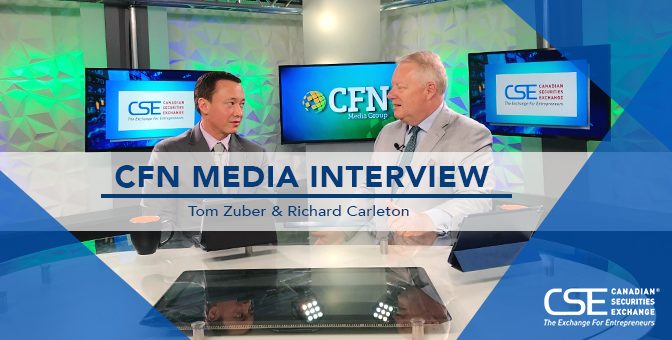
In this interview conducted in early December, CSE Chief Executive Officer Richard Carleton discusses market performance in 2025, touches on upcoming regulatory changes, takes readers inside the NSX transaction, and highlights some of the factors set to influence small-cap stocks in Canada during 2026.
The pace of traditional IPOs in Canada was slow again in 2025, while things seemed to pick up in the United States as the year went on, thanks largely to investor interest in the technology sector. What are the headwinds facing the domestic listing environment, and how is 2026 setting up for IPOs and other types of new listings?
As a result of the uncertain nature of the trading relationship with the U.S. and clouds on the horizon for the continued existence of the North American free trade zone, it is fair to say that business investment in new and existing enterprise in Canada was restrained for much of 2025 across most industry groups.
The Canadian Securities Exchange, of course, is mostly focused on the small-cap sector, and the relative paucity of new listings for much of the year reflected the uncertainty in the broader market. That said, it has to be acknowledged that the large-cap indices are either at or near record highs. So, what is happening?
First, the IPO is not a means that companies, large and small, are using to go public in Canada at this point. Instead, companies are raising money privately through prospectus exemptions and then qualify the securities for a public listing through a non-offering prospectus.
This technique is the predominant means that companies have used, particularly in the mining sector, over the past year and a half to go public on the CSE.
I think it is fair to say that, regardless of where you stand politically, domestic and international uncertainty has not been helpful to the investment climate in Canada.
One sign of this is that even with increasing prices for many commodities, and gold is the shining example, the junior space did not really get much in the way of attention from investors through investment capital or secondary market activity until the fall.
The catalyst appears to have been acquisitions and joint ventures from some of the mid-level producers in Canada, which sparked an immediate increase in trading turnover. It also appears to have facilitated a lot of secondary market financing activity for CSE listed issuers. We have also begun to see a small increase in the number of companies applying to go public on the Canadian Securities Exchange.
But generally speaking, when you talk about the U.S. market in 2025, the story is dominated by a small handful of stocks with a material stake in the AI and quantum computing future. Investors around the world are coming to the U.S. market to take a stake in these businesses. It has not really been much of a market story from a Canadian perspective in either the small-cap or large-cap space.
For existing issuers on the CSE, 2025 was notably better than the previous year, with trading volume higher and financings again growing in terms of total value. Can you walk us through some of the numbers and offer some insight into how the market performed?
As I mentioned earlier, we have seen the beginnings of improvement in the early-stage capital markets in Canada, and in particular for companies listed on the Canadian Securities Exchange. Another positive indicator is that, notwithstanding the challenges I’ve outlined earlier, the pace of financing activity is up over 2024 levels in the number of transactions and significantly higher in terms of dollars raised on a year-to-date basis: over $2.7 billion, compared to $1.45 billion a year ago.
So, we are looking at one of the better years in total capital raised that we have seen in the last three or four. And the interesting thing is that the mining industry has been responsible for more than half of the transactions and just under half of the capital raised.
As we look to next year, the trendlines are pointing in very positive directions.
The CSE announced the completion of its acquisition of the National Stock Exchange of Australia in October. Let’s first discuss the thought process behind this investment. Is the NSX on a path similar to what the CSE was on a decade ago?
We began speaking to the NSX around 15 years ago, and we noted that it was on a similar trajectory to us: focused on early-stage companies, competing with a well-entrenched incumbent exchange, and struggling to make an impact.
Indeed, the parallels are almost eerie. The NSX has about 52 listings; we had a similar number in 2010. Prior to the acquisition, the NSX’s balance sheet was challenged (also like us), and it is running the same technology that we integrated in 2005 (and retired in 2016). It hadn’t secured the necessary financial backing to execute the plan we delivered in Canada. With the capital we stockpiled (largely as a result of the trading and listing boom during the pandemic), we had the balance sheet strength to provide NSX with the support it has lacked to deliver a competitive venture market in Australia.
We believe the Australian market has many similarities to Canada. It generates a lot of new companies on an annual basis from the mining, technology, and life sciences sectors. And we also know there are a lot of companies listed on the incumbent exchange in Australia that find it expensive and difficult to retain their public listing.
The prize is that there is a very healthy retail and institutional capital market in Australia with an appetite for investment in early-stage companies. We believe that by positioning the NSX as a marketplace that serves the interests of investors and companies in the early-stage space, we have a chance to support a significant portion of the early-stage financing opportunities in Australia in a relatively short period of time.
We have a team that is deeply experienced, with many years of working in the capital markets in Australia and abroad. With time, energy, and the balance sheet issues corrected, the NSX team has an opportunity to make a significant positive impact on capital markets in Australia.
What are next steps in helping the NSX to realize its potential? How can the CSE’s experience growing its capabilities and listings over the past decade contribute to the NSX’s success?
It’s a great question in the sense that it has to do exactly what we did. The playbook does not have to be rewritten, just dusted off. The first thing – and none of these is more important than the other – is to put a new technology platform in place that is up to the needs of not only a growing exchange and a growing list of companies on the NSX but also provides trading competition to the ASX for ASX listed stocks.
At the same time, the team needs to be built out, and people need to know who the NSX is and what its value proposition is. It has to engage in the branding work that we did to get people to understand who the NSX is and why it makes sense to list there. Including, of course, the fact that people may know the management team but may not know that it has the balance sheet that ensures its existence.
Those two things are absolutely critical. And the key is to make sure we have the resources in place so that as companies begin to roll in – and it tends to come in as a trickle at first and then as an absolute flood if you are successful working with the early adopters – you have the resources and management systems in place to be able to render a high degree of customer service to those companies.
There would seem to be variation in performance at exchanges, perhaps most recently highlighted by the Cboe operations in Canada and Australia being put up for sale. How would you explain the differences in objectives and each entity’s ability to achieve them?
Even when really well run, exchanges operating cash equities markets, such as the Canadian Securities Exchange, Cboe Canada, Nasdaq Canada, Tradelogiq, Toronto Stock Exchange, or Toronto Venture Exchange, do not generate the kind of financial return that derivatives exchanges generate. That is why two of the largest exchange groups in the United States are the CME Group and the Intercontinental Exchange, the latter of which not only owns the New York Stock Exchange but also operates a number of commodity futures exchanges in the U.S.
The derivatives exchanges, because they are natural monopolies and control the clearing and settlement agency – it is a whole soup-to-nuts operation – generate consistently higher profits than those engaged in our line of work in the cash equities space.
We have seen a number of the large global operators – whether it be Deutsche Börse, Euronext, or London Stock Exchange Group – diversify away from the cash equities side and invest in derivatives markets. In addition, these large operators are also investing in the development and distribution of market data products, risk applications, and analytics. These are the kinds of information services that generate monthly subscription-based revenues and are sticky enough that you can forecast these revenues in two-to-five-year time frames.
That is one of the other issues with cash equities: we are subject to the vagaries of government policies, the interest rate environment, market sentiment, and so on. When times are good, we can operate quite profitably. But, through no fault of exchange management, markets can be bad, materially impacting returns without regard to the quality of exchange management.
Without knowing exactly why the Cboe made the decision they did in Canada and Australia, it is my educated guess that those businesses hold considerably lower return potential than some of the other opportunities they might have, and I think they concluded that further effort to grow those businesses could be applied to other businesses in their portfolio to generate higher returns.
We discussed earlier that fewer IPOs are taking place, yet the number of trading platforms in Canada seems to be growing. Is there a point at which adding more execution venues goes from enhancing competition to actually making markets less efficient?
That is an interesting way of looking at it. I think our customers, if you consider the investment dealers and certainly the investors that are using the system, would say they find the current system opaque, complicated, hard to understand, and from a dealer perspective, it increases the level of risk because there are many rules around how you try to ensure client orders are directed to the best-priced destination. The more venues there are with different order types and layers of connectivity and everything else, that obviously complicates and adds a degree of risk to those responsibilities.
I can’t say I know at what point competition becomes self-defeating in the space. What I will say is that on a per-capita basis, whether it is market capitalization, turnover, or any other measure you want to suggest, Canada seems to support more trade execution venues than any other market in the world. We have about one-third the number the U.S. has. With anything in finance, 10 to 13 times is the normal range between Canada and the United States. So, if we are one-third, that speaks volumes.
I suppose the other way to look at it is that in deciding where to invest our funds, we have obviously concluded that Australia is a potentially more interesting location than here in Canada, given the opportunities we believe exist to grow business there rapidly. The competitive pressure in Canada would probably prevent the rapid expansion of any one business at this point.
Important discussions have been taking place in the policy environment in 2025. The concept of broadening eligibility for Scientific Research and Experimental Development (SR&ED) tax incentives to Canadian public companies is gaining attention. There is also talk of modifying standards to lessen the requirements around quarterly financial reporting. Is the CSE supportive of such initiatives? Are there any caveats to be mindful of?
Before I answer the question directly, what I will say is that these efforts are indicative of a level of engagement from policymakers, government officials, and regulators to try to reduce the decline in the number of companies coming into the public markets.
It is like the stages of recovery, where admitting you have a problem is the first step. I think that realization has taken hold at every level of government. What we are seeing is a genuine effort from the regulators, as well as from the policymaking side of government, to see what can be done to improve the lot of public companies and reduce the expenses for companies to access public capital for growth purposes.
The measures mentioned in the question are two of many initiatives we are going to see in 2026. SR&ED for public companies has long been an obvious change to make. Consider a Canadian-controlled private company versus a small company listed on a Canadian exchange doing business in Canada and hiring Canadians – there is, frankly, no difference between those companies. Why does the private company qualify for SR&ED while the public company does not? So, we are obviously supportive of the changes the government is proposing.
Similarly, talk has been going on for a long time about reducing the reporting cycle for companies from quarterly to semi-annual. To be honest, we have changed our mind on the issue. We have been opposed over the years on the basis that early-stage companies should report key financial data on a quarterly basis – in particular, how much money they have on the balance sheet, what their burn rate is, and when they are likely going to have to raise additional capital to keep their project going.
We will be commenting on the proposals from Canadian securities regulators to implement a pilot program to move to semi-annual reporting for qualified companies, many of which are on the Canadian Securities Exchange. Our suggestion is that there be enhanced cash flow statements required on a quarterly basis, but that there is no need for the management discussion and analysis and the full financial report that is currently required.
We will be working with regulators to identify other areas we believe can and should be addressed at the federal and provincial levels to augment both the number of companies and to reduce the cost of capital for public issuers in Canada.
CSE executives have visited several overseas jurisdictions this year. What were your objectives, and is there anything to highlight from a global perspective for junior markets as we head into 2026?
Generally, when we travel with issuers internationally, it is because we are trying to understand how they are raising money overseas and what we can do to facilitate that process. We have seen over the years that, in some cases, there has been resistance to investing in companies listed on the Canadian Securities Exchange from investors in Europe or Asia or the United States because they don’t know who we are.
Consequently, we have to get out there and explain to the right people, so they understand who we are, the value proposition we represent, and that the organization is populated by executives with deep experience in the public capital markets in Canada.
It is less often that we are looking to recruit international companies to the Canadian market. Although that was certainly a focus during the cannabis days, when companies could not access capital locally and had to come to Canada to take advantage of those opportunities.
At this point in the cycle, we are looking to see where the issuers are going, who they are talking to, and what barriers we need to break down, all with a view to supporting their capital-formation efforts.
Specifically, gold exploration companies have historically found an audience in the German-speaking parts of Europe. We have taken steps to ensure they understand the benefits of a quotation in Frankfurt and some of the off-exchange trading platforms in Europe that are popular with retail and institutional investors.
Also, there are certain brokers who cover the family offices, private banks, hedge funds, and high-net-worth investors in these countries. We need to work with them to make sure they have appropriate levels of connectivity to the Canadian Securities Exchange so that when they have a CSE company showing them an investment opportunity, they know how to trade the stock once they become a shareholder.
That is why we travel internationally, and what we have learned this year is that with gold at more than US$4,000 per ounce, there is a lot of interest in the securities of Canadian early-stage exploration companies. We believe macroeconomics will support a continuation in the increase in the price of gold, so this is not a flash in the pan but rather a trend that will continue to play out over the next several years.
Tokenization of publicly listed securities is gaining attention once again. Based on the CSE experience, where do you see this working, and what are the pitfalls?
The question is always: what problem are you trying to solve with tokenization? If you ask 20 people at a blockchain conference, you’ll probably get 25 different answers as to why it makes sense to tokenize aspects of the securities industry.
There are people who believe on-chain public equities that are tokenized will immediately present instantaneous execution, 24-hour trading, your finances can be completely self-directed, you can have the securities in your wallet on your phone, etc. I don’t buy that for a second.
The systems and structures that have been built for traditional finance are there for a reason. They are there to solve the problems that decentralized finance, underlying crypto trading is wrestling with. I am talking about things like security, assurance that your trade will settle properly, that you will get the cash you expect, and that you will get the securities you purchase delivered in a certain way. There is an enormous investment in infrastructure to be able to provide those solutions for investors.
As I say, I am not in agreement with people who are thinking that these technologies will totally disrupt the existing frameworks of the securities industry. I don’t see that happening.
Now, there are benefits to using tokenization for real-world assets. It has the potential to increase the visibility for companies as to who their beneficial owners are, which means they can improve shareholder relations and competitive analysis compared to their peers.
If you are a musician, for example, and you have monetized your catalogue into a tokenized fund listed on an exchange, then if you find out who is holding your tokens, you can send them information about tickets to your upcoming concert, or you can drop new music you have coming out. There are all kinds of ways you can engage with your existing shareholders using the technology.
In Canada, the ability to quickly adopt a number of these innovations is probably going to be frustrated by the clearing and settlement system that we currently have in place. The United States appears to be moving fairly quickly, with Nasdaq and the Depository Trust & Clearing Corporation (DTCC) looking to provide a tokenized securities rail in the relatively near future. I think we are talking one and a half to two years at this point, and that will enable people to clear and settle and have custody arrangements effectively on a private blockchain that will be provisioned by DTCC. That way, people can opt into the system. It will be interesting to see what percentage of stock trades choose to settle down those channels.
Instead of doing a big bang, they are letting people drive the transition process, assuming there is a transition from where we are today to using more tokenization in the traditional finance space.
Let’s close with a look forward to 2026. What other initiatives does the CSE have planned for next year, and how do you foresee capital markets evolving to enable you to make the most of that vision?
A lot of my time is going to be focused on working with our Australian colleagues building out the proposition with the NSX. From an economic perspective, clearly, the uncertainty in Canada’s trading relationship with the United States will continue. I think it would be unlikely that the Americans will seriously engage with an extension to the free trade agreement. That would have some meaningful consequences, and we are already seeing them, of course, on investment in traditional manufacturing in Canada. We are likely to see the President continue to push for cheaper money, which, without the fundamentals to support it, will see a relative decline in the U.S. dollar. That will continue to put upward pressure on the price of gold, and I believe will focus more and more investment on the precious metals exploration space in Canada.
Similarly, we will see people beginning to think more clearly and strategically about how to supplant China in the supply chain for the so-called critical minerals. It is becoming plain that it has to be both public and private sources to not just invest in the companies that will find the rocks and advance the projects toward production, but projects need power, they need roads, they need rail, they need processing facilities and smelters, and they need port facilities to ship products to international markets. We are talking about billions and billions in investment in infrastructure. And those are the sorts of things that pension funds are good at, especially in partnership with government.
The public markets will supply the capital to the exploration companies identifying commercially significant discoveries, and also fund the eventual development of producing mines for these commodities.
I think that is going to be a continued theme in 2026. Canada is going to start to get its act together. We are going to begin to see more investments being made to advance that vision and those projects. Ultimately, this is positive for the public markets because we will be key partners in this economic development.
#AlwaysInvested