It may have escaped the attention of investors focused on gold and silver over the past year, but tungsten has become one of the most in-demand metals in global commodity markets.
The driver is defence. Tungsten’s combination of extreme density, hardness, and a very high melting point makes it essential for weapons, armour, and shielding, as well as for aerospace and other high-end applications.
Prices doubled in 2025 as defence demand accelerated and China announced new export controls. Tungsten ammonium paratungstate (APT) prices averaged around US$375 per metric ton unit (MTU) in 2024, rose above US$400 per MTU by May 2025 and climbed to more than US$1,000 per MTU by the end of the year.
Western supply is scarce. The U.S. and Europe remain heavily dependent on imports from geopolitical rivals, with China, Russia, and North Korea controlling more than 85% of global supply. As defence spending rises, the case for near-shored production is hardening – and long-dormant assets are being reassessed.
One such asset belongs to Allied Critical Metals (CSE:ACM; OTCQB:ACMIF), its flagship Borralha tungsten mine in northern Portugal. Borralha was shuttered in the mid-1980s when a surge in Chinese production drove prices well below US$100 per MTU, rendering many Western operations uneconomic.
With Europe’s rearmament drive still in its early stages, and NATO members committing to higher long-term defence spending, the European Union has identified tungsten as a critical raw material under its Critical Raw Materials Act, underscoring the strategic importance of domestic supply.
Against that backdrop, it is little surprise that efforts to restart operations at Borralha are moving at pace.
In October, idD Portugal Defence, a company under the supervision of the Ministry of National Defence and the Ministry of Finance that works to enhance Portugal’s defence technological and industrial base, endorsed the Borralha project via a formal letter of recognition as a “strategic initiative of national importance, with direct impact on Portugal’s and Europe’s defence supply chains.”
That support has translated into regulatory momentum. In January, Portugal’s environmental agency issued a favourable Environmental Impact Declaration for Borralha, clearing the way for the project to advance into detailed engineering and the next phase of permitting.
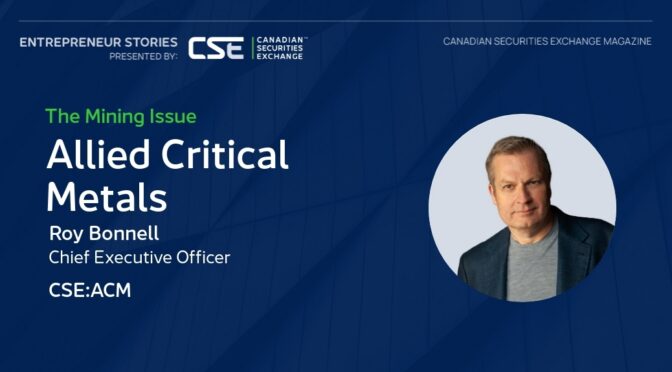
“These are indicative of the Portuguese government’s support of the project and underscore its strategic importance to Portugal,” says Allied Critical Metals Chief Executive Officer Roy Bonnell. “We’re working with the government right now to put in place the type of support that will help make this project a reality.”
The backing is consistent with a broader shift in Portugal’s approach to strategic minerals. This past month, for example, saw London-listed Savannah Resources confirm receipt of a €110 million (C$178 million) grant from the Portuguese government.
Restarting Borralha, which was one of Portugal’s most significant tungsten producers for around 80 years until it was shuttered in 1985, reflects changing economics. Its closure four decades ago was driven by low market prices at the time rather than any deterioration in the underlying geology, says Bonnell.
“The grades were always good. If you look around, there were a lot of tungsten mines that probably shut down,” he explains. “The grades at Borralha are fantastic, but they shut it down because of the prices.”
In September 2025, Allied reported results from a reverse circulation drill program targeting an ultra-high-grade zone within the Santa Helena Breccia. Highlights included an intercept of 12 metres of 4.27% tungsten (WO3), including 6 metres of 8.39%, a combination Allied highlights as one of the highest-grade tungsten intercepts reported in Western exploration.
Additional intercepts confirmed mineralization extending both down dip and along strike, supporting the view that higher-grade zones widen at depth rather than pinching out.
Recent drilling at Borralha has focused on extending known mineralization and testing higher-grade zones within the broader system. Bonnell says the results point to a large, continuous tungsten deposit with internal higher-grade shoots – a characteristic shared by several long-life tungsten operations globally.
A 20,000-metre drilling campaign is now underway, designed to further define these zones, convert inferred material into higher-confidence categories, and underpin upcoming economic studies. Current funding on the balance sheet is designed to get Allied through to the definitive feasibility study (DFS) stage.
In November, Allied upgraded Borralha’s mineral resource estimate, lifting measured and indicated resources to 13 million tonnes grading 0.21% WO₃, with a further 7.7 million tonnes at 0.18% WO₃ classified as inferred, all within the Santa Helena Breccia.
For readers less familiar with this corner of the commodities market, WO₃ contains about 79.3% elemental tungsten by weight, meaning a grade of 0.21% WO₃ equates to roughly 0.17% tungsten metal.
While headline grades may appear modest to non-mining investors, tungsten deposits are typically bulk-tonnage systems. In that context, Borralha compares favourably with other undeveloped Western projects, particularly when paired with its brownfield status, existing infrastructure, and proximity to European end markets.
As a brownfield project, converting those tonnes into cash flow becomes a lot easier. It has existing access, power, and a long history of underground mining, which lowers capital intensity, shortens development timelines, and should help potential off-take deals, says Bonnell.
In the current tungsten market, the economics look very different to those that prevailed when the mine was last operating.
Bonnell argues Borralha is unlikely to sit at the high end of the cost curve. “This is not a high-cost tungsten project by any means,” he says. “We’re going to be probably one of the least expensive ones in the Western world.”
When Allied began assembling the project in 2023, tungsten prices were closer to US$300 per metric ton unit. “It made sense to us even then,” Bonnell adds. “At current levels and around US$1,000 a tonne, it becomes tremendously exciting.”
Cost positioning matters in a market with a history of price volatility. Lower-cost operations are better placed to weather cyclical downturns, while retaining significant upside in a tighter supply environment.
The next milestone is a preliminary economic assessment (PEA), expected this quarter.
Bonnell says the company is funded through the current phase of 20 kilometres of drilling through the end of this year.
Beyond that, Allied is exploring a mix of funding options for construction. “We’re continuing to work with governments, not just the Portuguese government, but probably talking to the EU, to NATO, to Canada, to the U.S., and other governments, to make sure that we can get at least a base of financing that is as non-dilutive as possible to our shareholders,” Bonnell says.
“From there, we’ll be looking to move toward a larger financing for our plants, so we can move to construction as soon as possible.”
Allied is also looking to firm up off-take agreements with smelters, which would provide an early test of demand and add commercial validation to the project.
To that end, the company established a U.S. subsidiary last year to focus on the North American market, led by retired U.S. Army Major General James “Spider” Marks and Kirstjen Nielsen, who served as U.S. Secretary of Homeland Security during President Donald Trump’s first term.
“The U.S. is the biggest market in the world for tungsten, but there’s no domestic production,” says Bonnell. “It’s been more than a decade since there was any meaningful output. That creates an opportunity, because they have to buy from abroad.”
Four decades ago, Borralha was a casualty of low prices and global oversupply.
Today, as the U.S. and Europe rethink how to source critical materials, the mine’s revival reflects a broader shift in how strategic metals are valued – and who is expected to produce them.
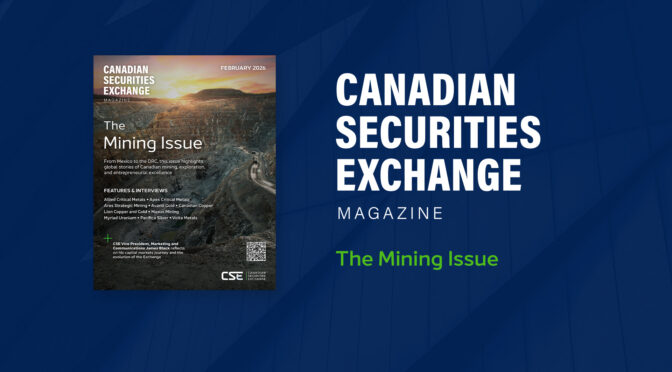
This story was featured in Canadian Securities Exchange Magazine.
Learn more about Allied Critical Metals https://alliedcritical.com/.