About This Video
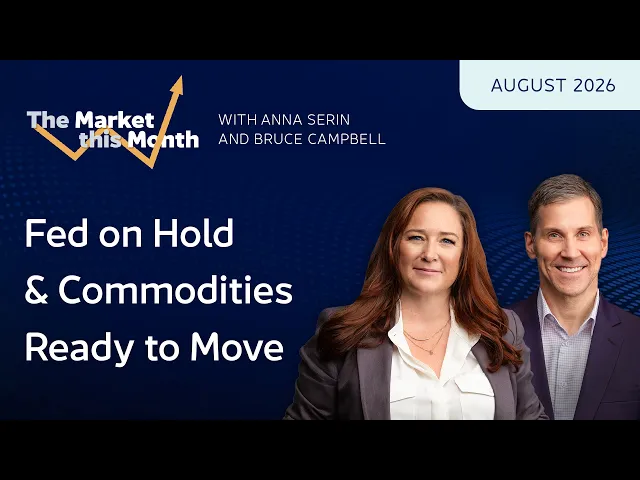
Episode 7 of The Market This Month is live! Powered by the Canadian Securities Exchange in partnership with Stockhouse, host Anna Serin and StoneCastle Investment Management's Bruce Campbell return with insights on tariffs, rates, commodities, cannabis, and small-cap strength.
Spotlight topic: Cannabis stocks spark renewed interest after President Trump floated reclassifying marijuana to Schedule III. From tax relief under Section 280E to potential U.S. exchange listings, Anna and Bruce unpack what could be the most significant policy shift for the sector in 50 years.
Also in this episode:
• Tariffs and trade uncertainty—how Canadian businesses are adapting
• Gold holds firm while copper and oil stumble
• Rate cuts on the horizon? Markets brace for the Fed’s September decision
• Nearly $600M in financings by CSE issuers in July
• Crypto adoption trends and cross-border capital flows
Is cannabis on the verge of another revolution—and will small caps carry their summer momentum into the fall? Tune in and decide for yourself.
Watch the episode now!
Subscribe for more great CSE insights and interviews here: https://go.thecse.com/CSETV-Subscribe
STAY CONNECTED WITH THE CSE
=============================
- NEWSLETTER: https://go.thecse.com/CSE-Mailing-List-Subscribe
- PODCAST: https://blog.thecse.com/cse-podcasts/
- INSTAGRAM: https://www.instagram.com/canadianexchange/
- LINKEDIN: https://ca.linkedin.com/company/canadian-securities-exchange
- FACEBOOK: https://www.facebook.com/CanadianSecuritiesExchange/
- TWITTER: https://twitter.com/CSE_News
- BLOG: https://blog.thecse.com/
- WEBSITE: https://thecse.com/
- MAGAZINE: https://issuu.com/thecse/docs
Read the TranscriptAuto-generated by YouTube; names and terms may be misspelled.
The Canadian Securities Exchange presents your go-to source for trends in junior and small cap markets. Each month, join host Anna Sarin and financial expert Bruce Campbell in partnership with Stockhose. Hi, my name is Anna Sarin. I'm director of listings development with the Canadian Securities Exchange. You're joining us for another market this month in August of 2025. I'm of course joined today by my wonderful co-host Bruce Campbell with
Stone Castle Investment Management. In this month's episode, we're diving into how August has been shaped by trade tensions, shifting commodities, and renewed momentum in the cannabis sector. Canadian employment numbers are down, and while tariffs keep piling up, the economists say the economy is holding together better than we expected, though cracks are beginning to show. In response, the government has rolled out programs to support tariff affected workers and is
accelerating both defense and infrastructure spending. It's worth noting that 85% of Canada's trade with the US remains tariff-free though. However, in July, President Trump raised tariffs to 35% on Canadian goods that are not compliant with Canada US Mexico agreement. Meanwhile, in cannabis stocks are sparking renewed interest after Trump said on August 11th that his administration is considerating reclassifying marijuana to a less dangerous schedule 3 drug. Currently, marijuana is a schedule one substance
classified alongside heroin as highly dangerous, addictive, and without medical use. Where it's been since the Controlled Substance Act was signed in 1970. Although 45 states have legalized marijuana for medical or recreational use, federal law still treats it as a top tiered controlled substance. If reclassified, marijuana would be regulated more like Tylenol with coding or anabolic steroids, prescription only, but available through licensed healthcare providers and pharmacies. This would
mark the most significant shift in federal marijuana policy in over 50 years in the United States. Reclassification wouldn't legalize recreational use nationwide, but it would reshape the regulation and taxation. For example, businesses currently barred from claiming federal tax deductions under section 280E would gain access access to significant tax savings, boosting profitability for license operators. It could also unlock easier access for clinical research long stifled under schedule one
restrictions. However, banking and payment barriers would likely persist. Most banks avoid businesses due to federal penalties. And according to a congressional research searches service report, scheduling alone is unlikely to change that. We'll break down what all of this means for the markets, check in on gold and copper and oil, and explore why cannabis could be on the verge of another major revelation. Let's dive in. Hi, my name's Anna Sarin. I'm director
of listings development with the Canadian Securities Exchange. You're joining us for another market this month. We are talking here in August of 2025 and I'm of course joined by my wonderful co-host Bruce Campbell with Stone Castle Investment Management. Thank you for joining me, Bruce. >> Yeah, thanks for thanks for having me, Anna. I'm We were talking in the green room there about how I can't believe summer is almost over. It's
it's kind of sad how fast it's flown by. >> It has flown by. And you know, Bruce, I think we'll talk about this today, but the markets have been quite busy for the summertime. Normally there's not as much to talk about, but it's been a busy summer in the markets, hasn't it? >> It sure has. I mean, between financings and activity, it it hasn't given us
much time to put our feet up and relax. >> Absolutely. We're going to get into some of those numbers this episode. It's pretty exciting stuff. so, let's let's dive into it. you know, we're going to talk about tariffs again because that's just a part of our reality these days. but you know I think one thing that you wanted to touch on is kind of what is the ripple effect
that's happening on tariffs? What are the economics of what's happening with the tariff life in Canada? >> I mean we've seen some real mixed numbers, right? So if you look at employment numbers, they were certainly weaker than what the consensus was expecting when they just recently came out here the early part of August, which is is is clearly disappointing. That's had an impact. I mean, there's a
lot of companies that still are kind of in that holding pattern. They don't know what to do because, you know, the tariffs are reduced and then they're back up. And it's, you know, it really it really kind of jams up businesses for sure. I know that in the US though the interesting thing is that the small business sentiment has has increased over the last month and it
it's increased now above the long kind of the long-term average which is good to see because if that you know that a lot of hesitancy because of and and sort of negative sentiment because of the fact that the tariffs were imposed and they you know most business people didn't know what that meant. And now as we're starting to get a little bit more clarity in the US, that's started to
help business sentiment. And then hopefully we can get some clarity in Canada. And then once businesses have, you know, a framework for which they can work in, then it's just a a function of, you know, that's the new operating manual that they have to run with. And most people are quite good at adapting from a business perspective. It's just the uncertainty of not knowing like are they on and how much and you know where
are they coming from and and things like that. So, it'll be nice to get that uncertainty dealt with and hopefully that can, you know, happen over the next few months here. >> I mean, look, I think I think on a global level, you know, we all sit and watch, and we're never really sure what Trump is going to do next. And that that creates a lot of uncertainty,
right? >> Yeah, 100%. And I mean, daytoday, you kind of never know what's going to come and and what direction that's going to come from. Not just tariffs, but there's so many, you know, so many other things. you know, he's there there's been lots of criticism of Fed. There's been, you know, obviously political geopolitical items that come out. There's been, you know, kind of these these different events as far as
you know, getting taxes on chip sales to China. It's it it just never seems to end and it's quite the flurry of of activity and you have to really be paying attention to know, you know, what today's news is versus what it was two days ago. >> That's right. there was one economist that works for one of the big banks that came out recently and said, "Well,
we're not dealing with the worst case scenario." Which I thought was very warming thoughts. So, we're not in Canada dealing with the worst case scenario of the fallout of these tariffs and and hopefully we continue to not see the worst case scenario. >> Yeah, exactly. >> All right. Well, we'll keep watching that. I mean, obviously, I think I think the markets generally are always they're always going to do a little bit
of a reawakening in September when everyone goes back to reality. So, we'll see what happens in the fall. okay, let's talk about commodities again. Again, this is a monthly thing we talk about. you know, gold has been holding strong. It's been quite a fantastic year to watch gold. and I know, copper and oil, they're not they're not holding some of the levels that they were. So let's let's
dive into that. >> Yeah, for sure. I mean, we you know, kind of the overlying theme is that the US dollar continues to still be relatively weak, right? I mean, it it it hit a top, you know, for the year back in in kind of the February time frame and has since declined. And I mean that certainly helps risk assets. It also helps gold because there's a
historically been a inverse correlation between between the two. And you know the one thing that is a little bit kind of puzzling is is the move in oil for sure. And that, you know, we saw oil kind of moving up and then it's it's recently pulled back and and what we would, you know, most investors would like to see for sure is that not oil spike up, but that it'd see a you know,
kind of steady incline because that's indicating that there's economic activity that's using up that oil that's out there. At the same time, we have seen, you know, OPEC increasing their supply and I think that that's certainly a political you know, political pressure that they're getting, I would imagine, from the US to keep oil within range just because, you know, everyone's so focused still on inflation and, you
know, that's a fairly big impact on inflation as it directly impacts but also trickles through. So that's, you know, that's kind of been important and and you know, we're watching it from a number of different perspectives, both from an investment perspective, but also from an economic perspective. And then, copper's kind of the same, right? I mean, it had a fairly strong move up during the year and then, you know, some
of the news out from President Trump and, you know, it had probably I think it might have been if it wasn't the the the biggest drop in one day history or two days. it was certainly right up there and I mean it's it's settled back down and it's going to be interesting to see, you know, kind of where it goes from from a record high to to being down
over 20%. So, it has been it's been challenging for sure in in the commodity markets. >> Again, you know, it'll be interesting to see what happens in September. Sometimes we it it's an odd one this summer because normally we see you know, some of these depressed levels that happen naturally in the summertime, but it's also been such a busy summer, it's hard to tell how much this is going to
stick. Do you think do you think that we're going to see some more strength in the fall? Well, certainly that would be, you know, that would be the way things have been trending as of right now. And, you know, we saw the April lows in the markets and and and also, you know, several of the commodities and then as the tariffs have walked back, things have continued to
improve. And the latest, you know, which we'll touch on as a sec in a second, is is the interest rates and, you know, kind of what the expectation is there. July and August can can kind of be, you know, a little bit wild cards. They tend to have lower volume and so markets tend to sort of drift in the direction that they've been going and and and they
have gone up in both July and now to where we are in August. September and October tend to be weaker months. That's looking at it from a historical perspective. And that that's going to be the really interesting tell is like when when you know the majority of investors get back to their desks after being away for summer, do they look at things and are they assessing whether or not you
know there's going to be some type of economic slowdown or other type of event that's going to cause earnings to be depressed and the market to go down and and so that's going to be really interesting to see. Certainly we're not seeing that tell right now. but it's something you always got to be keeping your eye on. >> Yeah, absolutely. Okay. okay. Well, let's let's [clears throat] hop into
we'll talk a little bit about why don't we actually talk about rates next just to just to dive into that because you mentioned it. you know what are the expectations for rates? Are they going up? Are they going down? When are we going to see that happen? >> Yeah, I mean the expectation in the US for sure is that rates are going to drop
and it it's now a fairly high probability. So, there's multiple different surveys that are done to try to determine what investors perceptions are on rate rate increases or decreases and what the probability of that is. And just recently that has gone to to almost a 90 I think it's 96% probability as of today that interest rates are going to be lowered in the September Fed meeting. and that there's
a couple of factors that sort of go into that, but one of them has been, you know, inflation and that the inflation numbers that were released earlier this week for for July were actually up, but they were a little bit tamer than what the market expected, which allows the Fed some room to lower rates. At the same time, there's been a tremendous amount of political pressure on Jerome
Powell to lower rates. President Trump has been all over them. And then even this morning, I saw an interview with Scott Besson, who's the Tre Treasury Secretary, and he was talking about how they should be 150 to 175 basis points or 1.5 to 1.75% lower than where they are right now. So, he's getting a lot of pressure to to to put rates down. And, you know, there there's a lot of name
calling that's going on. You know, he's being referred to as Jerome Too late Powell and things like that. and and so he is getting a lot of political pressure. At the same time, you know, he has to monitor and he's got his own mandate as far as inflation and employment goes. And so he's got to balance those two because he knows if he starts lowering rates too fast, it could
mean that we get inflation back. And and nobody wants to see that, especially after what we went through, you know, kind of going back three years ago. So I was just actually going to bring that up, you [clears throat] know, on that note is there was a time in market recap where we talked about inflation, you know, weekly, you and I. it's not something we've talked about a lot. So
obviously both in the US and Canada, there has been some correction in inflation. Is that right? >> Yeah. So I mean whack when we were talking about all the time, it went to 9% and then has slowly worked its way back down and now is sub 3%. And it's like, you know, kind of in the 2 1/2 2.7% annualized rate. So that's like the rate of inflation from one year to the next.
Yeah. So >> it's we're it's not like it's it's dropped down or anything like that. I mean from a good from a year ago is up >> or you know what we're basically paying is up around 2.7% from where it was. What we're going to see though probably in the next few months is that that starts to inch its way back up to around 3%. 3% is not too bad. Of course, that's
kind of that historical rate is kind of like that 2 to 3% range. But of course, we all have probably a little bit of scar tissue from the hyper, you know, high inflation that we saw at 9% and in some goods they were doubled in price. And nobody wants to go back to that because it just erodess purchasing power for everyone and is difficult for for everybody to keep up to. And so there's
a balance between full employment, which requires lower rates, and keeping rates at a certain level so that we don't get too much inflation. >> Okay. Well, you know, I mean, it feels like it's a a bit of a yo-yo. It felt like rates really were they were at a certain level without much movement for quite some time. and, it's definitely been an interesting few years
in the rates going up and down. So, it'll be interesting to see if they do get cut and then of course if they come down in the US typically what we see after that is that the Canadian rates go down as well. Is that right? >> not always. I mean it will be you know our our Bank of Canada acts completely independently of the the
Federal Reserve in the US and of course they have to look at what's happening here domestically. So they're looking and again trying to balance inflation with with employment and economic growth. I mean, there's a there's a strong chance that they could be lowering rates in the future as well because we're not seeing the strong economy and inflation's actually probably been a little bit lower here in Canada than it has been in the US. So,
it probably gives them a little bit of room to to lower rates. The one thing about, you know, most central bankers is they tend to be conservative in what they do. They don't unless it's almost a crisis where you know so when we had the high inflation they raise rates really quickly or if we were to see some type of you know massive economic decline where they lower rates
you know in a rapid fashion to try to spur on things generally they move you know kind of in a very slow and methodical way. >> Yeah. Okay. Okay. Well we'll see what happens there in September. Okay. Let's talk about cannabis. We don't talk about cannabis a lot anymore. There was a period of time where again like inflation it was something we talked about weekly. so Trump came out on
August 11th and said that he's looking at who knows what that means. potentially changing the schedule of of cannabis at a federal level in the United States. so tell us your thoughts there. Yeah, I mean this has been an offagain on again sector for a number of years and I mean the challenge with the sector is that we know the market itself is massive and we know that we know that
you know the product is the demand for the product is certainly there both from a legal perspective and from a black market perspective. The challenge has been for many of these companies is access to capital so they can grow their businesses but also the taxation that they pay. They there's there's a a tax in the US called 280E which refers to illegal substances. There was a
court case where there was a a drug trafficker who filed his taxes as if he was just a regular business but he was writing off all his expenses. And when they eventually caught up to what he was doing, they said, "Whoa, whoa, whoa. You can't write off your business expenses. This is an illegal product." And so they imposed this 280, which means that the normal cost of business activities that
that most businesses have that are able to write off, they can't do that with 280. So it just means that their costs are are really depressed. though they have to pay for those costs and their taxes are a lot higher than what another business that was outside of cannabis would be. And so this would if they reclassified it would actually allow those two things. One is that they would
no longer have to pay the 280E at least for sure on the medical side. There's still some uncertainty as to whether or not that would be the recreational side. And then the second thing is it would most likely open up access to capital because now you're going to have banks that would look at it from a different perspective. it's an illegal controlled substance. It's now a legal controlled
substance. And so they would be able to lend money perhaps to to some of these cannabis companies and then they'd be able to grow and increase their market share. So it would be profitable and at the same time they've also raised money >> and and to just touch on that too you know I mean the CSC has obviously know obviously seen over the years a
wonderful cannabis space evolve on our marketplace. one of the reasons that it's evolved so much and so big is because also US cannabis companies that touch the plant are not allowed to list on a US stock exchange, which is why we've seen so many of them come to the CSC. That would change that as well potentially, wouldn't it? >> It could. Yeah, for sure. I mean,
there's some talk that if it was reclassified, then at that point in time, they could get banking and with the banking that would allow them to list on a US stock exchange. it's a bit of a gray area. It's not 100% defined that if this happens, that happens. But certainly that's that's the interpretation that a lot of market watchers have when they look at this and
they sort of look at the politics of it all. I mean if that happens I you know I I think people maybe don't completely understand the exact scope and size of the K of the US capital pools but I believe the numbers are somewhere around on a global level the US equity capital is somewhere just over 60% and Canada's somewhere between three and four. it really would open up massive
pools of capital for the cannabis space. Don't you think? >> it would for sure. Yeah. you'd have you'd have you should get inst like bigger institutional ownership then in the sector because what's happened is a lot of custodians don't allow don't allow investors to hold cannabis stocks in their accounts at those custodians because it's deemed to be federally illegal and also a schedule one
substance and so as a result they don't want to go near it they can't bank it and it's it's really challenging That could that could be also a change that happens. >> Yeah. The other thing is I mean when we started this conversation years ago, you and I, Bruce, is I was actually surprised to see I I believe it's now 45 states. It's either recreational or
medicinal. It it is legal. which is pretty much the United States of America. So at some point it seems like it may just have to go there. it does also seem like from a political perspective, this is something that gets thrown into the ring and pulled out of the ring on a regular basis at the whim of of political parties
you know to be used for whatever reason. So so my hopes are up but who knows what that means. >> Yeah, it's certainly been challenging for for investors. the the amount of political swing that the industry can have is immense. Just as you know the the the view that it's going to be regulated or changed the regulations in some way, the optimism builds and then what's happened
is the rug gets pulled and then the sector crashes. And so so many people now have just like completely said like it's an uninvestable sector and you know are completely staying away. And I mean that's where eventually the opportunity will lie is that you know when it does actually change and it will at some point in time. It just we don't know if that's a year from now or 10 years from
now or more. but when it does eventually change they will it will really revolutionize the industry and allow you know for for big changes. Yeah, I was going to say I mean there the smart money has been the ones jumping in there every time this this gets thrown into the ring. because when it does go through it will be a massive shift within that sector. So
people are maybe getting a little tired of the you know the step in step out situation but there is a reason for it and and it will definitely change the sector. So and and it's it's so wonderful that CSE gets to be such a big participant of it. We have such wonderful companies that have grown raised capital for years now and and done some really fantastic work
as far as the sector goes. So excited for them when that does happen. okay, so let's talk about the small cap space. it's been it's been a great summer for the small caps. Tell us tell us more. Yeah, I mean, one of the things that we've kind of talked about in the past is that, you know, when when we came through the pandemic and then this
inflation happened to the degree that it did, a couple of things that that happened were that we saw the interest rates increase at one of the fastest rates in history, certainly in most people who have invested or been investors history. And then the second thing is that we saw the money supply go negative as far as a rate of change goes. It wasn't mean that the money
supply was negative, but just the rate of change was negative. So there was less money being created and in the system from a rate of change perspective. And that's something that that no one who's investing on the planet right now has ever experienced. Certainly if you were, you know, well into your hundreds, you would have experienced it in life, but not you wouldn't have been an investor back
then. And so what that means is that most small caps were in a really challenging environment for their business and then at the same time for their access to capital. And that's now really started to change. So we've seen rates starting to trickle their way down. So we've seen a few rate decreases. And then we've seen the rate of change of money supply going positive. And so what that means is that
now investors are starting to look for earnings. And the earnings that we saw in the smaller sectors, small cap sectors and sort of medium small cap companies was we really saw a a recession in that in that area over the you know last few years. And that's now started to change and we've seen earnings starting to ramp up and starting to increase as they have, you know, increase in their businesses,
increased access to capital and investors take note of that and of course they're following and and watching earnings and they go to where those earnings are accelerating and that's been the small cap area as well. In Canada, you know, our small caps tend to be led by commodities with the fact that gold has done so well. you're starting to see some trickle down now into other commodities. Lithium has
started to, you know, it's certainly come off the off the canvas and is now starting to move back up. And so those are a lot of constituents in the small cap indices in in Canada. And so you're starting to see that that start to really move. The the TSX Venture Exchange is, you know, considerably off its highs. So is the, you know, the CSSE composite. It's considerably off its
highs, but they've both made fairly significant moves off the bottom for sure. >> Yeah. Which is fantastic. And quite often you need that initial jump off the bottom to really kind of get the market moving. just to touch on on what we saw this summer at the CSC. in June, there was 101 financings that totaled 132 million in capital that was raised for CSE listed issuers.
In July, we saw 91 financings that totaled 595 million in financings. It was a busy summer for CSE issuers. You put those two numbers together, that's that's about 200 issuers out of the 745 that we have listed. That's a busy summer for CSE issuers. That's pretty amazing. >> Yeah. And a fair bit of money that was raised as well. >> Absolutely. Absolutely. I think I was
actually doing a presentation this week and I believe that over the past 12 months I think the number somewhere around 940 financings have been closed in 12 months. We have 745 companies. So our companies are very active right now which is really great to see. I know it's been a very difficult market. Probably a lot of these financings are are smaller financings you know for the company to deal with their corporate
governance needs and to kind of keep afloat. some are going to be for some smaller work programs, but it's still activity. You know, it's not zombie land that we're dealing with. So, I I have good faith that that there'll be some great activity in the fall. What do you think? I mean certainly that's a trend and when you see the summer this strong it tends to lead into you know some activity in
the fall that's going to be stronger because a lot of a lot of financings are often held in the summer just because they're concerned about the lack of access to investors because they're not at their desks and so so you know I wouldn't be surprised if you saw that trend continue through the fall. We also don't typically see a lot of these financings occur in June and July in the
resource sector because they are actively up at the property doing work programs. So you don't see it as often. You normally see it in the spring where they get their money for the work program, they're busy in the summer and then in the fall we get the results from those programs and then they're out there raising capital again. so, you know, I think it's all good news and
hopefully we continue to see that trend, as as we go into, the fall season. just to touch on some CSC issuer news. we had a few new issuers that joined us over the past month. So, welcome Trimera Metals Corp., Rush Gold Corp., and Gold Cana Resources. as you can tell from those names, these are all resource sector companies. I mean, Bruce, we've talked about it so much. It really the
resource sector continues to be the be the frontr runner in what's happening in the markets. one thing I did want to ask you though is that we've had a flurry of activity in the crypto space. What's your what's your thoughts there? What are you seeing? >> Yeah, I mean it we continue to see more adoption of of crypto into you know number of different vehicles. There's a
lot of ETFs that have been created that are now holders of crypto, but now you've also seen a lot of companies where they're holding crypto on their balance sheet or that's what they've turned their business plan into, which is, you know, also kind of interesting. it it's interesting and and I also find it a little bit on the, you know, kind of cautious side. I'm just
watching to see how this trend continues. Certainly there was a number of front runners that were doing this and now a lot of people are jumping in and you kind of have to wonder like is it a long longer term strategy or or not. certainly if crypto continues to appreciate then having crypto assets on your balance sheet is going to help you. but if that's your sole business,
you do have to, you know, really be careful that, you know, everyone's doing it the right way and that you're paying the proper valuation for them holding it on their balance sheet. >> I mean, it it seems to make sense to me that we're seeing kind of in a in what's percolating as a decent resource sector is to see kind of crypto percolating as well. because I think what we've
seen in the crypto space is traditionally people are hedging with having both of those on their balance sheet. So, welcome to the new companies that joined in the resource sector. and, and I think we'll continue to see both, continue to develop. one financing I wanted to mention, we actually talked about this company in the spring. but, I thought it was quite a wonderful
financing. Dragonfly, Inc., we talked about them in May, closed a $25 million US registered direct offering, on their NASDAQ listing. they raised 3.6 6 in May. they're a pioneer in drone solutions, AIdriven software and robotics, delivering innovative technology for public safety, agriculture, indust industrial inspections, security, mapping, and surveying for over 25 years. you know, I thought this was first of all, congratulations to them. It's great
financing, especially after they just did, you know, a decent sized one in the spring. but it's also nice to see our issuers that are successfully raising these kind of numbers in the US because I think with all of this tariff talk and with the crossber stuff where we had such an open relationship between our two markets specifically you know there's obviously been some concern of Canadian issuers being able to raise
capital down in the US. What are your thoughts on that? I mean it never hurts when you see that type ofity especially when Canadian companies can access US capital and vice versa. It's you know the flow of capital is what you want to see the the bigger and the broader markets are then generally the you know the best opportunities are found by investors. >> Yeah absolutely. Okay Bruce on that
note as we as we go into our last weeks of summer what are you going to leave us with? what should we think about before you and I can connect next month? >> Yeah, I mean the big thing is going to be, you know, watching what happens from an economic and tariff standpoint and then interest rates, what what we see there and how how that impacts the
the markets and the perception in the economy. >> Absolutely. Well, Bruce, it's always so great to see you. I'm hoping next month that I can get you to Vancouver here in person and we can we can do this face to face. in the meantime, enjoy the rest of those sunny days out in Colona. >> Yeah. Thanks so much. >> Thank you. We'll see you next month.